Меморандум USCIS от 22 мая 2026 года. Что в нём реально написано, как его читают разные адвокаты, и почему для виз талантов это менее страшно, чем кричат заголовки. Апдейт 23 мая 2026.
Информация
Это независимый разбор USCIS Policy Memo PM-602-0199 и открытых публикаций по теме, не юридическая консультация. Полный дисклеймер внизу.
Короткий словарик, чтобы не спотыкаться дальше
- USCIS - агентство, которое принимает и рассматривает иммиграционные формы
- AOS (Adjustment of Status) - подача формы I-485 на грин-карту изнутри США, без выезда
- CP (Consular Processing) - получение иммиграционной визы через консульство США за границей, альтернатива AOS
- INA §245 - раздел Immigration and Nationality Act, который регулирует AOS
- EB-1A, EB-2 NIW, O-1 - визы талантов: extraordinary ability, national interest waiver, рабочая виза для людей с выдающимися способностями
- Dual intent - правовой режим H-1B и L-1, разрешающий одновременно иметь намерение приехать временно и остаться постоянно
- RFE - Request for Evidence, запрос USCIS прислать дополнительные доказательства
- NOID - Notice of Intent to Deny, уведомление о намерении отказать, более серьёзная стадия чем RFE
- APA - Administrative Procedure Act, главный федеральный закон, по которому решения агентств оспариваются в судах
- BIA - Board of Immigration Appeals, иммиграционный апелляционный суд, его решения обязательны для USCIS
Содержание
- Главное за 30 секунд
- Шпаргалка для тех, кто только начинает путь
- Что реально написано в меморандуме. Прямые цитаты
- Самая защитная фраза для виз талантов. Цитата Kahler
Если читать всю статью некогда - вот суть в семи пунктах
- Что произошло. 21 мая 2026 года USCIS под подписью директора Joseph Edlow выпустил policy memo PM-602-0199. Меморандум объявляет AOS (грин-карту изнутри США) исключительной формой помощи вместо нормального пути. AOS не отменён, отменить его меморандумом невозможно. Но сдвинуто бремя доказывания: теперь чистой истории недостаточно, нужно показывать выдающиеся уравновешивающие факторы.
- Главная защитная цитата для виз талантов. Спикер USCIS Zach Kahler через CBS News, WaPo и BBC: заявители с "economic benefit" или "national interest" смогут продолжать AOS изнутри США. EB-1A и EB-2 NIW по определению ровно эти категории. Эту цитату стоит запомнить и использовать в дискуссии с адвокатом.
- Где спор юристов. Меморандум опирается только на жёсткое решение BIA Matter of Blas (1974) и игнорирует дружелюбное Matter of Arai (1970). На этой подмене адвокаты (Harris, Mehta, Paparelli, Carpenter) обещают APA-челлендж в федеральных судах. Loper Bright (2024) усиливает позицию истцов, потому что суды больше не обязаны слушать интерпретацию USCIS.
- Лагеря. Критики (Harris, Mehta, Paparelli, Carpenter): меморандум юридически уязвим, будет суд. Умеренные (Murthy, Boundless, Wolfsdorf, Harris Beach Murtha): закон не изменился, но стандарт ужесточился. Алармисты (Reddy, Bier, Rand, Valverde, Taub, Goss): катастрофа, готовьтесь к худшему. Все согласны, что подавать I-485 теперь надо как полноценный пакет с активным обоснованием положительных факторов, а не формальное приложение к одобренной I-140.
- O-1, EB-1A, EB-2 NIW. O-1 в quasi-dual intent зоне: ниже H-1B и L-1 по защищённости, но выше TN, E-3, F-1 и B-виз. Полностью успокаивающих публичных позиций по O-1 нет, полностью алармистских тоже. Для EB-1A и EB-2 NIW главная защитная стратегия от LexElite: использовать те же доказательства extraordinary ability и national importance, которые обосновали I-140, ещё раз, уже как обоснование outstanding equities.
- Диагностическое молчание. Бывшие топ-юристы DOJ (Vuong, Dawgert) публично пока молчат. Из 15 крупных think tanks только Cato Institute (David Bier) выпустил собственный анализ. Анти-иммиграционные think tanks (Heritage, FAIR, CIS) тоже молчат, не вступились в защиту. Это сильный сигнал, что меморандум юридически проблемный.
- Следующая контрольная точка. Жду первых отдельных меморандумов USCIS по конкретным группам и первых исков в федеральном суде. Реалистично до конца июня.
Сразу важное. Это не юридическая консультация.
Я не лицензированный адвокат США. Это разбор публично доступных материалов: пресс-релиз USCIS, текст самого меморандума, публикации крупных иммиграционных фирм, статьи в СМИ, комментарии think tanks. По вашему конкретному кейсу обращайтесь к лицензированному иммиграционному адвокату с активной лицензией в США.
Главная новость сразу
21 мая 2026 года USCIS под подписью директора Joseph Edlow выпустил policy memo PM-602-0199. (Policy memo это внутренний меморандум USCIS для своих офицеров: не закон, не регуляция, а инструкция, как им читать существующие нормы.) 22 мая агентство сопроводило это пресс-релизом, в котором USCIS-спикер Zach Kahler заявил: иностранцы, временно находящиеся в США и желающие грин-карту, “обязаны возвращаться домой и подавать через консульство, кроме исключительных обстоятельств”.
Полный текст меморандума на сайте USCIS, локальная копия PDF приложена к посту.
Министерство внутренней безопасности (DHS, материнская организация USCIS) подкрепило это твитом в X от 22 мая: “The era of abusing our nation’s immigration system is over” (“эра злоупотреблений нашей иммиграционной системой закончилась”). Тон взят максимально агрессивный.
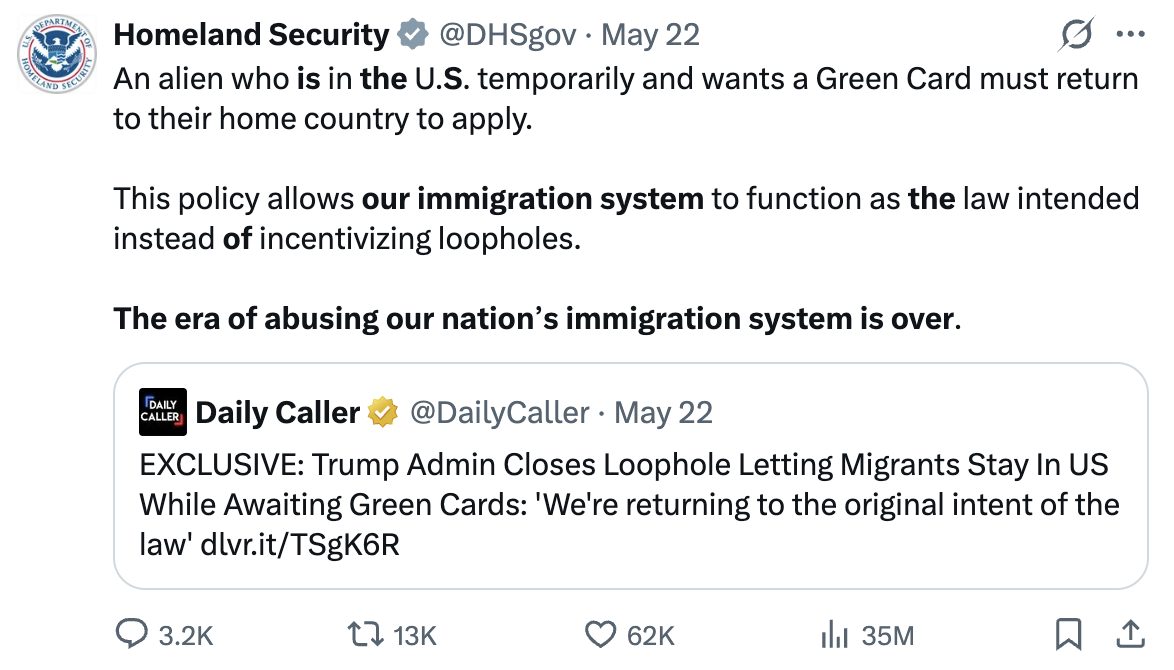
Скриншот того самого твита. 3.2 тысячи реплаев, 13 тысяч ретвитов, 62 тысячи лайков, 35 миллионов просмотров. Министерство репостит при этом не свой источник, а эксклюзивный материал Daily Caller, правоконсервативного издания, которое первым получило документ от администрации.
Тред под этим твитом сам по себе показательный. Поляризация мгновенная и резкая. Сторонники в основном из MAGA-базы (“Outstanding”, “I voted for this!”, “Awesome”, “GET THEM THE FUCKOUTOFMY COUNTRY”, “Mass deportations and a complete repeal of Hart Celler 1965. Make it happen”). Критика приходит сразу с двух сторон.
Слева критикуют как удар по легальной иммиграции, разлуку семей, тысячи лет ожидания. Справа неожиданный удар от Laura Ingraham (ведущая Fox News, обычно жёстко на стороне иммиграционных ограничений). Она запостила реплай со словом “Terrible” (ужасно), её аккаунт в X. Это любопытный сигнал. Ingraham исторически выступает против H-1B и корпоративной иммиграции. Её “Terrible” с большой вероятностью критикует не сам факт ужесточения AOS, а оговорку меморандума о защите H-1B и L-1 (dual intent). То есть она атакует справа за то, что меморандум недостаточно жёсткий к корпоративным работникам.
Среди именных критиков из адвокатско-экспертной среды повторяются те же имена, что и в крупных СМИ. Cyrus Mehta в своём блоге от 23 мая называет меморандум “an abrupt upheaval of established USCIS policy” (резким переворотом установившейся политики USCIS) и прогнозирует скорую litigation по линии Loper Bright. David Bier (Cato) в интервью The Hill называет нынешнюю администрацию “the most anti-legal immigration admin in US history” (самой анти-легально-иммиграционной администрацией в истории США).
Из tech-комьюнити прямую реакцию в X дал венчурный капиталист Nick Davidov, его твит от 22 мая: “The biggest bullshit move by DHS in its history. So everyone on a O1 or H1B visa would have to stop working legally in the US, go back to their country and wait for years of backlog?” (крупнейший идиотский шаг DHS в истории, теперь каждому на O1 или H-1B надо прекращать легально работать, ехать домой и ждать годами в backlog).
Заметное институциональное молчание: AILA на этот твит официально не отреагировала (хотя в тот же день написала USCIS отдельное письмо по другой теме, про reserved visa numbers). ACLU на запрос Fox News Digital для комментария отказалась дать его сразу. Республиканцы в Конгрессе ни защиты, ни критики публично не озвучили.
Реальный документ, лежащий за этим шумом, гораздо аккуратнее пресс-релиза. Об этом дальше.
Шпаргалка для тех, кто только начинает путь
Если вы только осматриваетесь в иммиграционной системе США, сначала про базу, без которой дальше будет непонятно.
В США есть два пути получить грин-карту (постоянное место жительства, по-английски Permanent Resident Card или Green Card).
Подача формы I-485 изнутри США. Человек уже здесь по какой-то визе (H-1B рабочая, F-1 студенческая, O-1 для талантов, B-1/B-2 туристическая) и переводит свой статус на постоянный, не выезжая из страны. До меморандума это был стандартный путь для большинства, кто уже легально в США.
Подача через американское консульство за границей. Человек ждёт интервью в своей стране, получает иммиграционную визу, и въезжает в США уже как permanent resident.
Меморандум USCIS не отменил AOS. Он не может его отменить, потому что AOS прописан в самом законе, в разделе 245 Immigration and Nationality Act (INA). Меморандум перевернул отношение офицеров к AOS: теперь это надо рассматривать как “extraordinary form of relief” (исключительная льгота), а не как нормальный путь.
То есть USCIS объявляет “исключением” то, что десятилетиями было основной практикой.
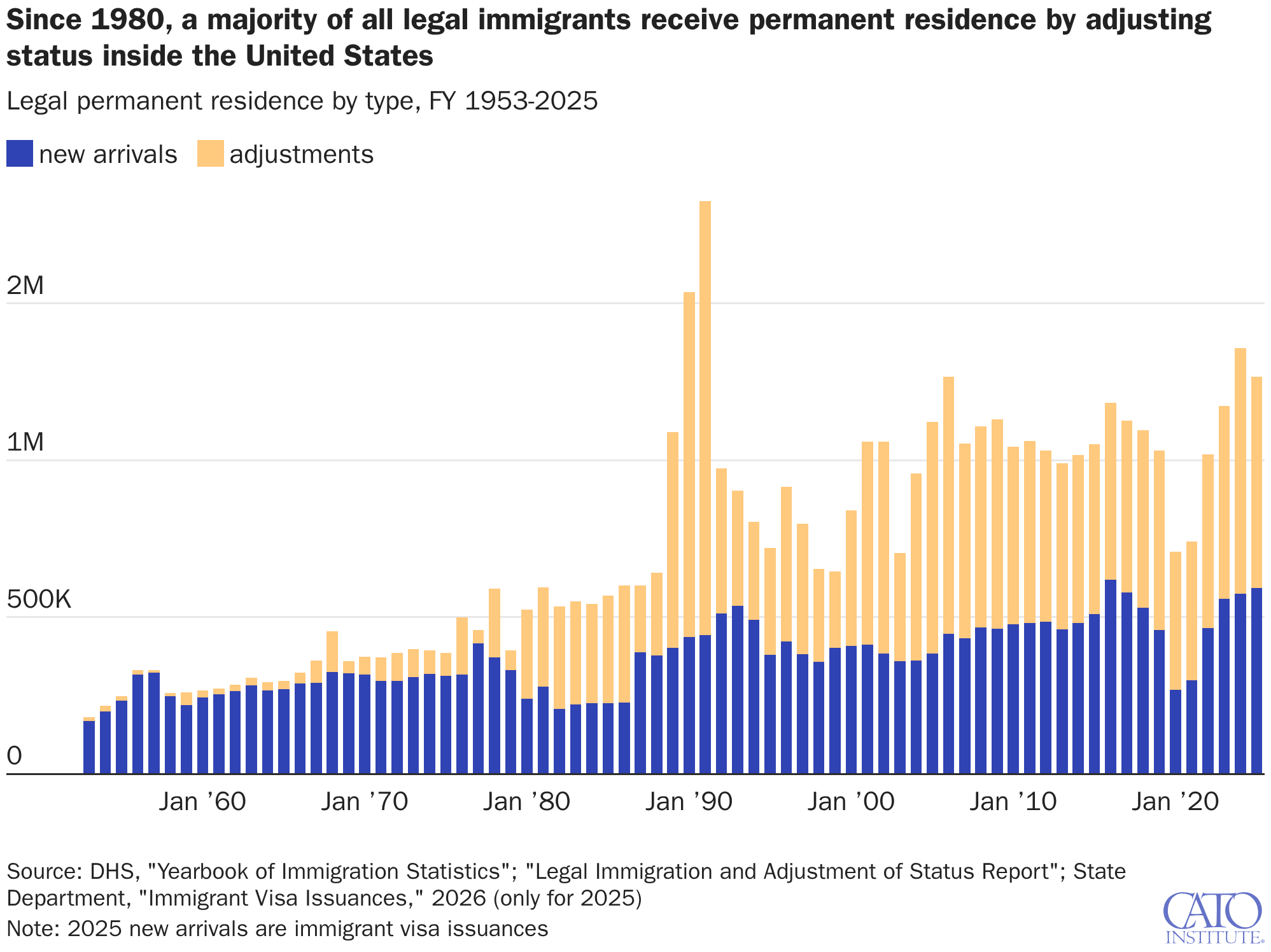
График Cato Institute. Жёлтым показаны AOS-одобрения, синим консульский путь. Источник: DHS Yearbook of Immigration Statistics, State Department Immigrant Visa Issuances. Лицензия CC BY-NC-SA 4.0.
Если вы готовите визу талантов, ваши категории это обычно: EB-1A (Extraordinary Ability, петиция о выдающихся способностях), EB-2 NIW (National Interest Waiver, петиция о работе в национальных интересах США), O-1 (рабочая виза для людей с extraordinary ability, временная). EB-1A и EB-2 NIW это категории self-petition: можно подавать самому, без работодателя. O-1 это промежуточная рабочая виза, многие подают её первой, а EB-1A или NIW потом.
Меморандум применяется ко всем employment-based категориям, включая EB-1A, EB-2 NIW, EB-2, EB-3 и employment-based H-1B-кейсы. Узкие исключения в меморандуме перечислены для исторических групп: кубинцы по специальному акту 1966 года, выходцы из ряда центральноамериканских стран по закону NACARA 1997 года (Nicaraguan Adjustment and Central American Relief Act, специальный акт для беженцев от гражданских войн в Центральной Америке), гаитяне по закону HRIFA 1998 года (Haitian Refugee Immigration Fairness Act, акт для гаитян, прибывших до 1995 года), asylees и refugees (люди с уже одобренным политическим убежищем или статусом беженца), ветераны армии США. Если вы из России, Украины, Беларуси, Казахстана, Индии, Китая и большинства других стран, и готовите визу талантов, ни одно из этих исключений вас не покрывает.
Что реально написано в меморандуме. Прямые цитаты
Меморандум короткий, шесть страниц с двадцатью четырьмя сносками. Я прочитал его целиком. Ниже ключевые формулировки в оригинале с переводом, без интерпретаций.
Главная новая фраза, на которой держится всё. Страница 5:
"The absence of adverse factors, by itself, does not demonstrate such unusual or outstanding equities."
Перевод: Отсутствие негативных факторов само по себе не доказывает наличия таких необычных или выдающихся уравновешивающих факторов.
Что это значит. Раньше работала простая логика: у меня чистая история (нет overstays, нелегальной работы, фрода), значит офицер должен одобрить. Меморандум переворачивает: теперь чистой истории недостаточно. Нужно активно показывать что-то выдающееся. Бремя доказывания сдвинулось на заявителя.
Прямое признание H-1B и L-1 как dual intent виз. Страница 5:
"USCIS reminds its officers that applying for adjustment of status is not inconsistent with simultaneously maintaining nonimmigrant status in a category with dual intent."
Перевод: USCIS напоминает офицерам, что подача на AOS не противоречит одновременному поддержанию неиммиграционного статуса в категории с двойным намерением.
Что такое dual intent. Это юридическая концепция, по которой держатель определённых виз имеет право одновременно иметь намерение приехать временно и остаться постоянно. Прямо закреплено только за H-1B и L-1. Остальные визы формально single intent, человек обязан декларировать намерение уехать после окончания пребывания.
Хорошая новость: H-1B и L-1 не дисквалифицированы автоматически. Плохая новость сразу в сноске 20:
"However, maintaining lawful status in a dual intent nonimmigrant category is not sufficient, on its own, to warrant a favorable exercise of discretion."
Перевод: Однако поддержание законного статуса в категории с двойным намерением само по себе недостаточно, чтобы оправдать благоприятное применение усмотрения офицера.
Что это значит. Раньше H-1B был самой защищённой категорией для AOS. Меморандум формально не отменил эту защиту, но прямо говорит: одного факта легального H-1B-статуса теперь недостаточно. Нужно показывать положительные факторы сверх простого “я работаю в статусе”.
Список негативных факторов. Меморандум на странице 5 прямо перечисляет, на что офицер должен смотреть как на минусы:
- нарушения иммиграционных законов или условий статуса;
- текущий или прошлый fraud или false testimony (мошенничество или ложные показания) в общении с USCIS или любым государственным агентством;
- нарушения при подаче на въезд или parole;
- поведение после въезда, несовместимое с заявленной целью пребывания;
- любые признаки, что человек приехал по непостоянной визе с намерением остаться.
И отдельно подчёркнуто на странице 5:
"An alien's failure to comply with the conditions of their nonimmigrant admission or parole and an alien's failure to depart as expected are highly relevant to this analysis."
Перевод: Несоблюдение иностранцем условий неиммиграционного въезда и отказ покинуть страну в ожидаемое время очень важны для этого анализа.
Что это значит для типичного сценария виз талантов. Если человек приехал по туристической или студенческой визе (B-1/B-2, F-1) и остался, чтобы подавать I-485, в новом мире это явный минус. Логика USCIS: мог же поехать домой и подать через консульство. У O-1 этот вопрос мягче, потому что O-1 формально не требует декларации о возвращении на родину (об O-1 отдельно ниже).
Процессуальная защита заявителя. Страница 6:
"When the denial is based on an unfavorable exercise of discretion, the denial notice must include an analysis containing the positive and negative factors considered, along with an explanation of why the negative factors outweigh the positive factors."
Перевод: Когда отказ основан на неблагоприятном применении усмотрения, уведомление об отказе должно содержать анализ рассмотренных положительных и отрицательных факторов и объяснение, почему отрицательные перевесили.
Что это значит. Офицер не может просто написать “отказано по усмотрению”. Он обязан расписать плюсы, минусы и взвешивание. Это даёт заявителю формальную базу для апелляции или motion to reopen (ходатайства о пересмотре дела).
Что меморандум обещает в будущем. Страница 6:
"USCIS may provide policy guidance specific to certain adjustment of status categories or discrete populations of aliens."
Перевод: USCIS может выпустить отдельные политические руководства для конкретных категорий AOS или отдельных групп иностранцев.
Что это значит. Это только первый меморандум. USCIS прямо анонсирует вторую волну с правилами для конкретных групп: студенты F-1, parolees, возможно отдельные правила для employment-based категорий. Ожидать в ближайшие недели и месяцы.
Самая защитная фраза для виз талантов. Цитата Kahler
Это единственная фраза из всего шума вокруг меморандума, ради которой стоит дочитать до конца, если вы готовите EB-1A или NIW.
Спикер USCIS Zach Kahler в комментарии CBS News от 22 мая 2026 года (репортаж Camilo Montoya-Galvez) и в письменном ответе Washington Post прямо обозначил исключение. Точная формулировка от USCIS-spokesperson, приведённая через BBC по Yahoo News:
"People who present applications that provide an economic benefit or otherwise are in the national interest will likely be able to continue on their current path while others may be asked to apply abroad depending on individualised circumstances."
Перевод: Люди, чьи заявки приносят экономическую выгоду или иным образом отвечают национальному интересу, скорее всего смогут продолжать по текущему пути. Остальных могут попросить подавать из-за границы, в зависимости от индивидуальных обстоятельств."
Почему это важно именно для виз талантов. Категория EB-2 NIW дословно называется National Interest Waiver, и одобрение этой петиции означает, что USCIS уже признал работу заявителя в национальных интересах США. Категория EB-1A это extraordinary ability, выдающиеся способности. Обе категории по определению ровно те, про кого Kahler говорит “economic benefit or national interest”. То есть USCIS своими же словами обозначил, что таких заявителей трогать не будут так же жёстко, как остальных.
Это не гарантия, потому что Kahler не объяснил конкретных критериев и не сказал, как офицеры будут это определять. Но это публичное обещание от спикера агентства, на которое можно прямо ссылаться в ответе на RFE (Request for Evidence, официальный запрос USCIS с просьбой дослать дополнительные доказательства) и в дискуссии с адвокатом.
В тот же день, 22 мая, Daily Caller (правоконсервативное издание, которое первым получило документ от администрации) опубликовало эксклюзивную цитату самого директора USCIS Joseph Edlow:
"Under President Trump, USCIS is returning to the original intent of the law and reinforcing the proper distinction between temporary admission and permanent residence."
Перевод: "При президенте Трампе USCIS возвращается к изначальному замыслу закона и восстанавливает правильное разделение между временным въездом и постоянным проживанием."
Это пока единственный публичный комментарий самого директора USCIS лично, не через спикера.
Откуда у адвоката появится аргумент против отказа. Два старых решения иммиграционного апелляционного суда, объяснённые без юридического жаргона
Если вам придёт RFE или отказ по новому меморандуму, ваш адвокат будет искать опору в старых судебных решениях. Эти решения важно понимать, потому что от них зависит, какой именно аргумент адвокат сможет поставить в защиту вашего пакета.
В США есть орган, который рассматривает иммиграционные апелляции. Называется Board of Immigration Appeals, сокращённо BIA. Что-то вроде внутреннего верховного суда по иммиграции. Его решения обязательны для офицеров USCIS. И у этого BIA есть два очень старых, но до сих пор живых решения по AOS. Одно более дружелюбное к заявителю. Другое более жёсткое. Меморандум USCIS опирается только на жёсткое и игнорирует дружелюбное. Это и есть главная зацепка для адвокатов.
Дружелюбное решение. Matter of Arai, 1970 год. Представьте, что вы подаёте на грин-карту, и у вас всё чисто: статус соблюдён, налоги заплачены, никаких overstays (просрочек) и нелегальной работы. По решению Arai от 1970 года в такой ситуации офицер должен одобрить, это нормальный исход. Дословная формулировка:
Ключевое слово тут “ordinarily” (обычно). Arai говорит просто: чистая история = обычно одобряют. Только если у заявителя есть негативные факторы, тогда от него требуется показать что-то выдающееся, чтобы это перевесить.
Жёсткое решение. Matter of Blas, 1974 год. Через четыре года в другом деле, где заявитель был замешан в фроде, тот же BIA вынес противоположную по тону формулировку: AOS это “extraordinary form of relief” (исключительная льгота), не нужно её давать автоматически. В контексте того дела это было логично, у человека был реальный фрод. Но фраза осталась в судебной практике на полвека, и теперь её достают.
Что именно сделал USCIS в новом меморандуме. USCIS взял фразу из жёсткого Blas (что AOS “исключительная льгота”) и применил её ко всем заявителям подряд, даже к тем, у кого ничего негативного в истории нет. При этом в тексте меморандума 2026 года ссылки на дружелюбное Arai вообще нет. То есть USCIS как будто забыл про более старое и более защитное решение того же самого BIA.
Что это даёт лично вам
Если придёт RFE или отказ "по усмотрению офицера", у вашего адвоката будет готовый аргумент: меморандум опирается только на жёсткое Blas, но базовое решение по AOS это Arai, и Arai говорит, что чистую историю надо одобрять. Меморандум USCIS не имеет полномочий отменить решение BIA. Этот аргумент будет работать и в ответах на RFE, и в будущих федеральных исках против меморандума.
Доктринальную критику по этой линии первым публично сформулировал Cyrus D. Mehta. Это один из самых уважаемых иммиграционных адвокатов США, бывший председатель AILA New York Chapter. (AILA это American Immigration Lawyers Association, главная профессиональная ассоциация иммиграционных адвокатов США, что-то вроде их адвокатской палаты по теме иммиграции.) Mehta ведёт авторитетный блог blog.cyrusmehta.com. Когда он пишет про иммиграционные дела, его читают и адвокаты, и журналисты, и судьи. В X.com Mehta высказался почти сразу после публикации меморандума, цитата приведена через Forbes (Stuart Anderson):
"While adjustment of status is discretionary under INA 245 it has never been interpreted as an extraordinary form of relief and USCIS is inventing a new standard to deprive noncitizens from getting green cards in the U.S."
Перевод: "Хотя AOS дискреционен по INA 245, он никогда не интерпретировался как 'экстраординарная форма помощи'. USCIS изобретает новый стандарт, чтобы лишить иностранцев права на грин-карту в США."
Mehta назвал интерпретацию слова “may” в INA 245(a) как “extraordinary” фразой “giant unfaithful leap” (огромная недобросовестная подмена) и прямо связал дело с прецедентом Верховного суда Loper Bright (2024). Loper Bright это решение Верховного суда, отменившее доктрину Chevron, по которой суды раньше уважали интерпретации федеральных агентств. После Loper Bright суды сами решают, как читать закон, и не обязаны следовать интерпретации USCIS. Это сильно усиливает позицию истцов в будущих исках против меморандума.
Что говорят сами адвокаты. Три лагеря
Мнения после публикации меморандума разделились резко. Чтобы было проще ориентироваться, разнесу адвокатов на три условных лагеря. У каждого юриста сначала справка кто это, откуда у мнения вес.
Лагерь критиков. “Это превышение полномочий, будет суд”
Michael A. Harris (HarrisLaw P.A., Майами). Иммиграционный адвокат с 2000 года. Board Certified Specialist по иммиграционному праву во Флориде (сертификация, которую имеет меньше 1% флоридских иммиграционных юристов). Один из первых выпустил полный юридический разбор меморандума 22 мая. Полный текст разбора.
Harris выдвигает три линии атаки. Первая: меморандум противоречит самому закону.
"INA §245(a) does not say that adjustment may be granted only when consular processing is unavailable. It does not require an applicant to prove extraordinary circumstances."
Перевод: "Закон INA §245(a) не говорит, что AOS предоставляется только при недоступности консульской обработки. Закон не требует от заявителя доказывать исключительные обстоятельства."
Вторая линия: USCIS неправильно использует судебные прецеденты. Большинство дел, на которые ссылается меморандум, вынесены в контексте removal proceedings (производства об удалении из страны) или связаны с заявителями с криминальной историей и фродом. Переносить эту логику на законопослушного H-1B-работника, который соблюдает статус, по мнению Harris, натяжка.
Третья линия: APA-уязвимость. APA это Administrative Procedure Act, главный закон США о работе федеральных агентств. По нему любое решение агентства можно бить в суде, если оно “произвольное и капризное”. Harris пишет:
"If USCIS denies a case primarily because the applicant chose adjustment rather than consular processing, even though Congress allowed adjustment, the denial may be vulnerable as contrary to law or arbitrary and capricious under the Administrative Procedure Act, 5 U.S.C. §706."
Перевод: "Если USCIS откажет в деле в первую очередь потому, что заявитель выбрал AOS, а не консульскую обработку, при том что Конгресс разрешил AOS, такой отказ можно атаковать как противоречащий закону или произвольный и капризный по APA."
Robert Carpenter (Minsky McCormick & Hallagan, Чикаго). Senior Litigation Attorney с 33+ годами стажа. Специализация: federal court litigation против USCIS, в том числе APA-челленджи. То есть человек, который собственными руками много лет бьёт USCIS-отказы в федеральных судах. Когда такой ветеран что-то говорит, это сигнал. Разбор Carpenter.
Главное наблюдение Carpenter:
"The memorandum does NOT change any laws or regulations and does NOT eliminate adjustment of status as a legal avenue to apply for a green card."
Перевод: "Меморандум НЕ изменяет ни одного закона или регламента и НЕ ликвидирует AOS как законный путь подачи на грин-карту."
Carpenter также фиксирует, что меморандум подан как “unsigned, unattributed memorandum” (не подписан конкретным человеком, нет ясной авторской атрибуции). Для процессуального оспаривания в суде это важная деталь.
Angelo Paparelli. Один из самых цитируемых employer-side иммиграционных адвокатов США. Партнёр Vialto Law (US) LLP. Бывший президент AILA Southern California chapter. Ведёт блог Nation of Immigrators.
Paparelli опубликовал собственный разбор меморандума в LinkedIn 22 мая. Его центральный аргумент: Конгресс десятилетиями встраивал AOS в саму архитектуру иммиграционной системы, особенно для employment-based кейсов. Дословно:
"Section 245(k) explicitly anticipates up to 180 days of unlawful status, unauthorized employment, or other violations after admission and says, in effect, 'you can still adjust.' That is not how you treat a rare indulgence; that is how you normalize real-world bumps in an otherwise meritorious case."
Перевод: "Раздел 245(k) прямо допускает до 180 дней нелегального статуса, неавторизованной работы или иных нарушений после въезда и фактически говорит: 'ты всё равно можешь адъюстировать'. Так не обращаются с редкой милостью. Так нормализуют житейские шероховатости в иначе достойном кейсе."
Дальше Paparelli разворачивает ту же логику на AC21 portability (механизм, по которому H-1B-работник с pending I-485 более 180 дней может сменить работодателя на ту же или похожую позицию, не теряя priority date) и Child Status Protection Act (закон, который привязывает защиту детей-зависимых от aging out к дате подачи AOS). Его вывод дословно:
"If USCIS wants to lean on that narrative, it needs to grapple openly with how 245(k), AC-21, CSPA, and 245(c) have transformed adjustment from a narrow act of grace into an integral, congressionally-structured pathway."
Перевод: "Если USCIS хочет опираться на этот нарратив, агентство должно открыто разобраться с тем, как 245(k), AC-21, CSPA и 245(c) превратили AOS из узкого акта милости в неотъемлемый, структурно встроенный Конгрессом путь."
Лагерь умеренных. “Закон не изменился, но правила игры стали хуже”
Sheela Murthy (Murthy Law Firm, Балтимор). Одна из самых узнаваемых фигур в иммиграционном комьюнити США. Фирму основала в 1994 году, ведёт известный сайт MurthyDotCom с бесплатной информацией по иммиграционному праву. Особенно сильна в employment-based и family-based кейсах из Индии и Китая. То есть из тех двух стран, откуда идёт основной поток I-485.
Murthy не алармист и не контрарианец. Когда она говорит “будет жёстче”, это сигнал для всего комьюнити, что обычный аккуратный практик уже видит надвигающуюся проблему. Её newsflash от 22 мая:
"USCIS intends to apply heightened scrutiny in green card adjudications going forward."
Перевод: "USCIS намерен применять повышенный уровень проверки при рассмотрении грин-карт в будущем."
Boundless. Не классическая адвокатская фирма, а легал-тех компания из Сиэтла, основана в 2017 году. Полу-онлайн-сервис подачи иммиграционных кейсов с привлечением партнёрских адвокатов. Специализация на массовых family-based кейсах. У них есть прямой коммерческий интерес: если паника заставит клиентов отказаться от подачи, бизнес-модель страдает. Поэтому их “не паникуйте” нужно читать с поправкой. Но интересно, что после внутреннего юридического разбора они объявили, что продолжат подавать AOS:
"That is not how I personally read the memorandum. The closest statement is in case citations, but even there the citations just state that adjustment of status is discretionary, it's the noncitizen's burden of proof, and adjustment should only be granted in meritorious cases."
Перевод: "Я лично не читаю меморандум таким образом. Ближайшее заявление есть только в цитатах судебных дел, но и там просто говорится, что AOS дискреционен, бремя доказывания на заявителе, и что AOS должен предоставляться только в meritorious-делах."
Главное наблюдение Boundless
фразы "only in extraordinary circumstances" в самом тексте меморандума нет. Эта фраза есть только в пресс-релизе. Это политический спин, не операционная инструкция офицерам.
Wolfsdorf Rosenthal (WR Immigration). Одна из крупнейших чисто иммиграционных фирм США, 100+ адвокатов. Основана Bernard Wolfsdorf, экс-президентом AILA. Специализация на employment-based и EB-5. Их client alerts читают HR-департаменты крупнейших корпораций. Их разбор:
"This memorandum largely serves as a reaffirmation of USCIS's longstanding position that adjustment of status is discretionary and not guaranteed solely because an applicant satisfies the baseline eligibility requirements."
Перевод: "Этот меморандум в основном служит подтверждением давней позиции USCIS, что AOS дискреционен и не гарантирован только потому, что заявитель соответствует базовым требованиям."
Лагерь алармистов. “Катастрофа, готовьтесь к худшему”
Rahul Reddy (Reddy Neumann Brown PC, Хьюстон). Фирму основал в 1997 году, 28+ лет в employment-based иммиграции. Член AILA с 1995 года, со-основатель ITServe Alliance, крупнейшего объединения индийских IT-консалтинговых компаний в США. То есть его клиентская база это десятки тысяч индийских H-1B-инженеров с многолетним backlog. Когда такой человек пишет алармистский заголовок, это не маркетинг. Это сигнал клиентам.
Заголовок Reddy: “Pending Adjustment (I-485) Cases in Danger. Is This the End of the Road for AOS?”
"If your I-485 has been sitting at USCIS for months or years, this memo applies to you starting now. Eligibility is no longer enough. Worthiness is the new standard."
Перевод: "Если ваша I-485 лежит в USCIS месяцы или годы, этот меморандум касается вас уже сейчас. Соответствие требованиям больше недостаточно. 'Достоинство' (worthiness) это новый стандарт."
David J. Bier (Cato Institute). Director of Immigration Studies в Cato Institute, либертарианском исследовательском центре. Раньше был senior policy adviser у конгрессмена Raúl Labrador (R-ID, 2013-2015), лично писал тексты иммиграционных законопроектов. Его исследования цитировались Верховным судом США. Это не блогер, а человек, чьи цифры суды используют как фактическую базу. Полный разбор Bier:
"Now, every legal immigrant must leave the country, that is, self-deport, even if they are qualified for a green card and even if leaving would disqualify them."
Перевод: "Теперь каждый легальный иммигрант обязан уехать из страны, фактически самодепортироваться, даже если он квалифицирован на грин-карту и даже если отъезд его дисквалифицирует."
И ещё одна цитата Bier из Washington Post:
"It's like someone from 1940s America has taken over the immigration system. Adjustment of status has been a normal part of operations in immigration law for over 70 years. There's nothing extraordinary about it."
Перевод: "Это как будто кто-то из Америки 1940-х захватил иммиграционную систему. AOS был нормальной частью иммиграционного права более 70 лет. В нём нет ничего экстраординарного."
Bier приводит важный контекст: меморандум вышел не на пустом поле. По его данным, USCIS уже сократил одобрения грин-карт примерно вдвое за прошлый год, в основном за счёт простого нерассмотрения заявлений. Меморандум переводит это с тихого торможения на формальный план массовых отказов.
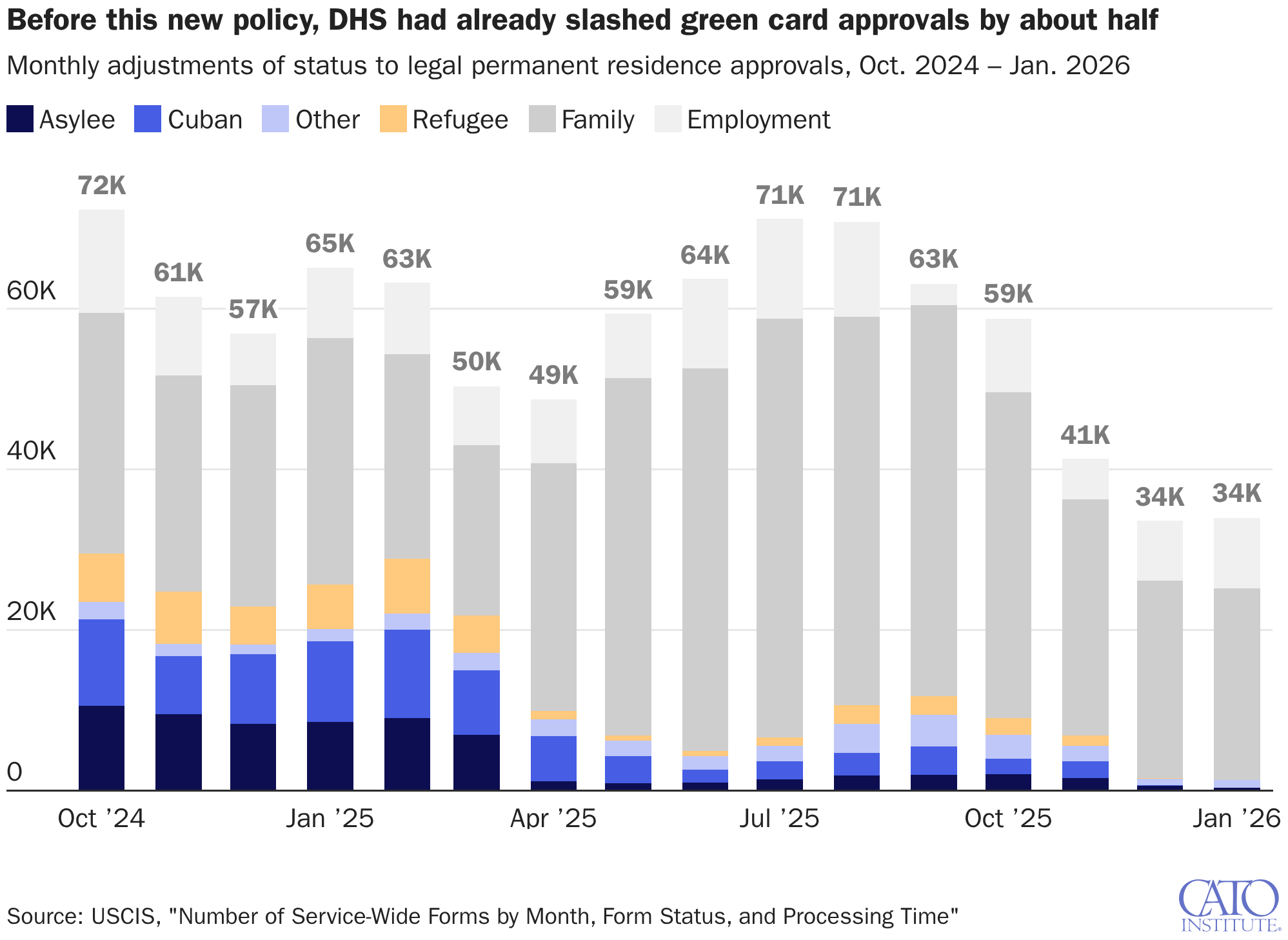
График Cato Institute. Ежемесячные одобрения AOS по категориям с октября 2024 по январь 2026. Падение более чем вдвое. Особенно резко рухнули asylee, refugee и cuban сегменты внизу. Источник: USCIS Number of Service-Wide Forms by Month. Лицензия CC BY-NC-SA 4.0.
Doug Rand. Бывший Senior Advisor to the Director of USCIS в 2021-2025 годах. То есть человек, который последние четыре года был внутри USCIS на стратегической позиции при администрации Байдена. Сейчас публично комментирует политику нового руководства. Его слова через CBS News:
"The purpose of this policy is exclusion. Remember that Trump has banned people from over 100 countries from returning to the U.S., so forcing them to go abroad for consular processing is no pathway at all."
Перевод: "Цель этой политики, это исключение людей. Трамп запретил въезд гражданам более чем 100 стран. Заставлять их ехать за консульской обработкой, это вообще не путь."
Michael Valverde. Бывший senior official USCIS при обеих администрациях, республиканской и демократической, до своего ухода в прошлом году. Особо ценный голос, потому что Valverde не партийный комментатор и не активист. Это профессиональный бюрократ, который видел работу USCIS изнутри много лет. Когда такой человек называет шаг “беспрецедентным”, это вес. Его цитата через BBC по Yahoo:
"This is a largely unprecedented move that will limit lawful immigration to the US greatly. People who followed the rules faithfully now face tremendous uncertainty."
Перевод: "Это в значительной степени беспрецедентный шаг, который сильно ограничит легальную иммиграцию в США. Люди, которые добросовестно соблюдали правила, теперь столкнулись с огромной неопределённостью."
Elissa Taub (Siskind Susser). Партнёр известной иммиграционной фирмы Грега Сискинда. Её комментарий Newsweek от 22 мая:
"This announcement by USCIS to further restrict legal immigration within the United States by effectively eliminating the Adjustment of Status process will not only cause severe hardship to families of U.S. citizens forced to separate for an indefinite time period, but it will also result in the loss of talent."
Перевод: "Это решение USCIS дополнительно ограничить легальную иммиграцию внутри США, фактически ликвидируя процесс AOS, нанесёт серьёзный ущерб семьям граждан США, вынужденным разлучаться на неопределённое время, а также приведёт к потере талантов."
Liz Goss (Goss Associates, Бостон). Основательница бутиковой иммиграционной фирмы в Бостоне, в иммиграционном праве с 1999 года. Сильна в employment-based кейсах, особенно для биотех- и фарм-индустрии Массачусетса. Регулярный комментатор Forbes у Stuart Anderson (одного из ведущих иммиграционных журналистов США). Её комментарий Forbes:
"The memo could affect everyone, including H-1B visa holders, people on Temporary Protected Status and others. The memo states that it is up to an officer's discretion."
Перевод: "Меморандум может затронуть всех, включая H-1B и TPS-холдеров. Меморандум прямо отдаёт всё на личное усмотрение офицера." (TPS это Temporary Protected Status, временный защищённый статус, выдаётся гражданам отдельных стран в кризисных ситуациях.)
Goss отдельно подчёркивает контр-аргумент про vetting в Washington Post: эти люди уже прошли проверку для получения временных виз, это не вопрос безопасности. Затронуты будут врачи, профессора, исследователи, CEO.
Что говорят про O-1, EB-1A и EB-2 NIW конкретно
Это раздел, ради которого, наверное, большинство читает разбор. Поэтому отдельно по каждой категории, и только то, что реально говорят опубликовавшиеся адвокаты, без советов от меня лично.
O-1, самый частый вопрос аудитории
Меморандум на странице 5 прямо упоминает только H-1B и L-1 как dual intent. O-1 в тексте не названа. Это и создало волну вопросов: что с O-1 делать?
Для понимания контекста, O-1 формально не имеет требования residence abroad (намерения вернуться на родину). Это закреплено в 9 FAM 402.13-10(a), внутренней инструкции Госдепа для консулов: “An applicant for an O-1 visa does not have to have a residence abroad which they do not intend to abandon” (заявителю на O-1 не нужно иметь место жительства за границей, которое он не намерен покидать). Из-за этого O-1 относят к категории quasi-dual intent: не полное dual intent как у H-1B и L-1, но и не строгое single intent как у F-1 или B-визы.
Самая ясная публичная позиция по O-1 после меморандума есть у Ballard Spahr. Это крупная многопрофильная фирма, член World Law Group (международная сеть из 61 фирмы в 92 странах). Их иммиграционная практика регулярно отмечается Chambers USA. То есть это “большой капитал в иммиграции”. Их разбор:
"O-1 status is not officially a dual-intent status, although it is treated as permitting 'quasi' dual-intent. H-1B and L-1 status are the only two nonimmigrant categories that explicitly allow for dual intent."
Перевод: "Формально O-1 не является dual intent статусом, хотя на практике с ним обращаются как с разрешающим 'квази' dual intent. H-1B и L-1 это единственные две неиммиграционные категории, явно допускающие dual intent."
Boundless более тревожно:
"O-1 visa holders could also be more directly impacted as it is not explicitly designated as dual intent under the statute. O-1 holders should consult with counsel before proceeding with an AOS application in the current environment."
Перевод: "Держатели O-1 могут оказаться затронуты более напрямую, поскольку O-1 не обозначена явно как dual intent в самом законе. Им следует проконсультироваться с адвокатом перед подачей AOS в текущих условиях."
Wolfsdorf относит O-1 к категории, которая может получить дополнительный scrutiny, но не катастрофически:
"TN, O-1, E-3, H-1B, E-2 visa holders should work with their employer and counsel to monitor the memorandum's impact on these cases as they may receive additional scrutiny."
Перевод: "Держатели TN, O-1, E-3, H-1B, E-2 виз должны вместе с работодателем и адвокатом следить за влиянием меморандума на эти кейсы, так как они могут получить дополнительный scrutiny."
Иерархия рисков, на которой сходятся Ballard Spahr и Boundless: самый низкий риск у H-1B и L-1, средний у O-1 (quasi-dual), выше у TN и E-3, самый высокий у F-1, J-1 и B-виз.
Что нашлось в публичных источниках и чего не нашлось. В крупных СМИ (Forbes, Reuters, AP, NYT, Newsweek, Bloomberg, ABC, NBC, CBS) отдельного разбора O-1 после меморандума нет. Murthy в своём newsflash O-1 не упоминает. Reddy Neumann Brown выпустили отдельный гайд только для H-1B и L-1, без O-1. Klasko Immigration Law Partners по состоянию на 23 мая отдельного алерта по Harris Beach Murtha обсуждают single vs dual intent в целом, без отдельного упоминания O-1. То есть консенсус по O-1 пока формируется именно через несколько крупных фирм.
Реалистичная сводка: полностью успокаивающих публичных позиций по O-1 нет. Полностью алармистских тоже. O-1 ниже H-1B и L-1 по защищённости, но выше TN, E-3, F-1 и B-виз. Boundless рекомендует обязательную консультацию с адвокатом перед подачей AOS.
EB-1A и EB-2 NIW
Самое полезное наблюдение по высоко-квалифицированным заявителям пришло от фирмы LexElite Law. Их разбор:
"For high-skilled applicants, that often means the very evidence that drives the underlying petition, extraordinary achievement, contributions to the United States, the national importance of the work, should be repackaged to do double duty as discretionary equities."
Перевод: "Для high-skilled заявителей это означает, что те же доказательства, которые обосновали саму петицию (выдающиеся достижения, вклад в США, национальная значимость работы), должны быть переупакованы и работать дважды: ещё и как discretionary equities.
И отдельно, про связь между категорией и аргументом Kahler:
"If you are an L-1, H-1B, O-1, or E visa holder adjusting through, say, an EB-1A or EB-2 National Interest Waiver petition, you cannot assume that because you kept status flawlessly, discretion is automatic. Keeping status keeps you eligible. Under this memo, it does not, by itself, earn you the grant."
Перевод: Если вы L-1, H-1B, O-1 или E-холдер и подаётесь через EB-1A или EB-2 NIW, не предполагайте, что раз вы безупречно поддерживали статус, усмотрение офицера автоматически в вашу пользу. Поддержание статуса делает вас eligible. Под этим меморандумом этого само по себе для одобрения недостаточно."
Главный полезный угол LexElite
те доказательства extraordinary ability или national importance, которые принесли одобрение I-140, теперь нужно использовать ещё раз, уже как обоснование "outstanding equities" из языка меморандума. Это та же история, рассказанная второй раз, но с другим юридическим фокусом.
Murthy подчёркивает важный нюанс по сценариям въезда. Если кандидат на NIW въехал по B-1/B-2 или F-1, в новой реальности появляется аргумент “preconceived intent” (то есть USCIS может утверждать, что человек изначально приехал с намерением остаться). Это самый уязвимый сценарий. У O-1-холдеров такой проблемы нет, потому что O-1 уже сама по себе не требует декларации о возвращении.
Молчание insider-ов и think tanks. Что не говорят те, от кого ждут анализа
Отдельное диагностическое наблюдение, которое полезно зафиксировать. По состоянию на 23 мая 2026, через 48 часов после публикации меморандума, целая категория источников, от которых обычно ждут глубокого анализа, молчит. Само это молчание показательно.
Молчат бывшие insider-ы DOJ и USCIS
В январе 2026 года два бывших топ-юриста Министерства юстиции открыли в Денвере фирму Ariela Lake Law & Consulting. Это Sarah Lake Vuong (бывший Assistant Director DOJ Office of Immigration Litigation, одна из 4-6 высших позиций в офисе, ранее Associate Counsel в USCIS Office of Chief Counsel, ушла из DOJ в августе 2025) и Jess Ariela Dawgert (бывший Associate Deputy Attorney General DOJ, бывший Senior Litigation Counsel в DOJ, 15+ лет в DOJ, до этого Staff Attorney в Втором апелляционном округе). Обе с допуском к Bar Верховного суда США.
Это люди, которые буквально писали и защищали в судах иммиграционную политику США последние 15 лет. Когда такие фигуры выходят на сторону частных клиентов, их инсайдерская оценка нового меморандума должна быть на вес золота. По состоянию на 23 мая публичных комментариев Vuong и Dawgert по Я проверил отдельным исследованием: сайт фирмы не имеет блога или news-секции, в крупных СМИ они не цитируются, в Google-индексации LinkedIn по теме меморандума их постов нет, в каталоге AILA как спикеры по этой теме они не значатся.
Возможные причины молчания. Фирма открылась только в январе 2026, пока не выстроили публичный content-канал. Vuong ушла из DOJ в августе 2025, и стандартные post-employment ethics ограничения DOJ (обычно 1-2 года) могут ограничивать её публичные комментарии по политикам, к которым она была близка по службе. Возможно, готовится непубличная litigation-стратегия для конкретных клиентов, где открытые комментарии повредили бы.
Их публичный голос ожидается через 2-6 недель после первых волн RFE и NOID (NOID это Notice of Intent to Deny, уведомление о намерении отказать, более серьёзная стадия чем RFE), когда станет понятно, как офицеры на местах реально применяют меморандум.
Молчат другие think tanks. Cato/Bier временный монополист
Я проверил 15 крупных think tanks: Migration Policy Institute, National Foundation for American Policy (NFAP, Stuart Anderson), American Immigration Council, Niskanen Center, AEI, Heritage Foundation, Brookings, Center for American Progress, FAIR (Federation for American Immigration Reform), CIS (Center for Immigration Studies), EPI, Bipartisan Policy Center, R Street, Manhattan Institute, Hoover. По состоянию на 23 мая только Cato Institute (David Bier) опубликовал собственный анализ PM-602-0199 в окне 21-23 мая. Все остальные молчат.
Особенно интересно молчание анти-иммиграционных think tanks (Heritage, FAIR, CIS), которые обычно быстро выпускают защитные тексты в поддержку рестриктивной политики. Их обычный спикер по legal-regulatory защите Andrew Arthur (CIS) обычно реагирует в первые 24-48 часов. По PM-602-0199 от него тишина. Это может означать, что меморандум воспринимается ими как технический rebranding существующей дискреции, не требующий защиты. Или что они ждут судебных вызовов перед тем как высказываться. Или что согласны с критиками о юридической слабости меморандума и не хотят рисковать репутацией.
Для аудитории это означает простое: думайте, кто говорит и кто молчит. Cato (либертарианский, обычно критичный к федеральной власти) выпустил жёсткий анализ. Heritage и CIS (обычно защитники рестриктивной политики) не вступились. Это сильный сигнал, что меморандум юридически проблемный. Если в ближайшие 2-3 недели от них так и не появятся defensive материалы, это станет дополнительным фактическим аргументом в будущих APA-исках: даже идеологически близкие к администрации эксперты не нашли способа защитить меморандум публично.
Где я буду смотреть в ближайшие недели
- USCIS Policy Manual, Volume 7, Part A, Chapter 10 (Legal Analysis and Use of Discretion). Когда конкретно перепишут под меморандум. Это главный внутренний документ для офицеров. Изменения там покажут, как USCIS реально хочет видеть применение меморандума на местах.
- Federal Register на предмет RIN-ов USCIS. Если агентство решит закрепить меморандум в виде регуляции через notice-and-comment rulemaking, это будет первый сигнал, что готовится более серьёзный, юридически защищённый вариант.
- Блог Cyrus Mehta, Murthy newsroom, Reddy Neumann Brown. Глубокий доктринальный анализ обычно появляется через 5-14 дней после события. От Mehta жду подробного разбора по линии Loper Bright.
- Forbes-колонка Stuart Anderson. Anderson возглавляет NFAP, один из самых уважаемых иммиграционных think tanks. Его реакция через Forbes обычно опережает официальные NFAP-бриф-ноты на несколько дней.
- LinkedIn и сайт Ariela Lake Law. Если Vuong и Dawgert выпустят первый комментарий, его стоит читать буквально с лупой.
- Первые иски в district court. Кто подаст первым, по какому основанию (APA arbitrary and capricious, противоречие INA §245, или процедурный аргумент через 5 U.S.C. §553), в какой circuit. Особенно интересна реакция Девятого федерального апелляционного округа, традиционно склонного защищать заявителей в иммиграционных вопросах.
- Reddit-сообщества r/USCIS и r/immigration. Первые рассказы о реальных RFE и NOID, выпущенных под новым стандартом. По ним можно будет судить, насколько широко офицеры читают меморандум.
- Следующие отдельные меморандумы USCIS по конкретным группам заявителей. Сам PM-602-0199 на странице 6 это прямо анонсирует. Самые вероятные следующие: parolees (CHNV, Uniting for Ukraine), студенты F-1, B-визы.
Короткий итог
USCIS 21 мая выпустил, 22 мая опубликовал PM-602-0199. Меморандум объявляет AOS (грин-карту изнутри США) "исключительной формой помощи" вместо нормального пути. AOS не отменён, отменить его меморандумом невозможно. Но сдвинуто бремя доказывания: теперь чистой истории недостаточно, нужно показывать "выдающиеся уравновешивающие факторы".
Спикер USCIS Zach Kahler через CBS News, WaPo и BBC: заявители с "economic benefit" или "national interest" смогут продолжать AOS изнутри США. EB-1A и EB-2 NIW по определению ровно эти категории. Эту цитату стоит запомнить и использовать в дискуссии с адвокатом.
Меморандум опирается только на жёсткое решение BIA Matter of Blas (1974) и игнорирует дружелюбное Matter of Arai (1970). Adv этой подмены адвокаты (Harris, Mehta, Paparelli, Carpenter) обещают APA-челлендж в федеральных судах. Loper Bright (2024) усиливает позицию истцов, потому что суды больше не обязаны слушать интерпретацию USCIS.
Критики (Harris, Mehta, Paparelli, Carpenter): меморандум юридически уязвим, будет суд. Умеренные (Murthy, Boundless, Wolfsdorf, Harris Beach Murtha): закон не изменился, но стандарт ужесточился. Алармисты (Reddy, Bier, Rand, Valverde, Taub, Goss): катастрофа, готовьтесь к худшему. Все согласны, что подавать I-485 теперь надо как полноценный пакет с активным обоснованием положительных факторов, а не формальное приложение к одобренной I-140.
O-1 в quasi-dual intent зоне: ниже H-1B и L-1 по защищённости, но выше TN, E-3, F-1 и B-виз. Полностью успокаивающих публичных позиций по O-1 нет, полностью алармистских тоже. Для EB-1A и EB-2 NIW главная защитная стратегия от LexElite: использовать те же доказательства extraordinary ability и national importance, которые обосновали I-140, ещё раз, уже как обоснование "outstanding equities".
Бывшие топ-юристы DOJ (Vuong, Dawgert) публично пока молчат. Из 15 крупных think tanks только Cato/Bier выпустил собственный анализ. Анти-иммиграционные think tanks (Heritage, FAIR, CIS) тоже молчат, не вступились в защиту. Это сильный сигнал, что меморандум юридически проблемный.
Жду первых отдельных меморандумов USCIS по конкретным группам и первых исков в федеральном суде. Реалистично до конца июня.
Дисклеймер
Информационный характер материалов
Я не являюсь лицензированным адвокатом США и не оказываю юридических услуг. Материал не является юридической консультацией и не заменяет её. По вашему конкретному делу обращайтесь к лицензированному иммиграционному адвокату с активной лицензией в США.
