Это прямое продолжение моего большого разбора «Mukherji v. Miller спустя три месяца». Там вся предыстория: пять оснований, по которым судья Bataillon снёс Final Merits, портрет адвоката Брайана Грина и его модель «11 тысяч за иск», расклад по AAO против федерального суда. Здесь я ничего из этого не пересказываю. Здесь только то, что произошло после, сами судебные документы (публикую оба полностью) и разбор «что дальше».
Тот пост я закончил контрольной точкой: 11 мая, дедлайн первой письменной речи правительства в Восьмом округе. Мол, из неё станет понятно, на чём USCIS будет драться.
Так вот. Драться USCIS не будет вообще.
Вчера, 10 июня 2026 года, правительство отозвало собственную апелляцию. Не проиграло её, не довело до слушаний, не дождалось ни одного брифа. Просто пришло в суд и сказало: мы передумали. К вечеру того же дня Восьмой округ дело закрыл, выпустил мандат, и решение судьи Bataillon, то самое, которое признало Final Merits Determination незаконной, стало окончательным и необжалуемым.
В том посте, в разделе «Страшилка для самого USCIS», я писал: в кулуарах обсуждают, что USCIS, может, не очень-то и хочет продолжать, потому что проигрыш в Восьмом округе открывает дорогу в Верховный суд, а там можно получить «Final Merits незаконна по всей стране, и точка». Признаюсь честно: когда я это писал, это выглядело как красивая теория. Вчера она перестала быть теорией.
Я просидел день в PACER и судебных базах, выкупил документы, и ниже полная картина: что именно произошло, как это выглядело по часам, почему правительство сдалось, и главное, что это меняет для тех, у кого RFE, отказ или петиция в работе. Спойлер: меняет меньше, чем хочется, но больше, чем кажется.
«USCIS отозвал апелляцию, значит, Final Merits всё, отменили? Теперь все дела будут одобрять по трём критериям?»
Нет. И вот это «нет» и есть самая важная часть поста. Правительство сдало одно дело, чтобы спасти всю систему. Это была не капитуляция, а отступление на заранее подготовленные позиции. Разбираемся.
Содержание
- Один день, который всё закончил: хронология 10 июня по минутам
- Бриф, который так и не родился: хроника тихой капитуляции
- Публикую оба документа: капитуляция в 115 слов и приказ суда
- Почему правительство сдалось. Арифметика, которая всё объясняет
- «Их же теперь завалят исками?» Завалят. И их это устраивает
- Что USCIS делает прямо сейчас (проверено вчера вечером)
- Брайан Грин больше не одиночка: команда из бывших юристов DOJ
- Пост Грина и комментарии под ним: цех читает ход одинаково
- Тест на 11 тысяч: окно EAJA открылось
- Что это меняет для вашей петиции, RFE и отказа
- Вопросы из чата: коллективный иск и другие «а можно ли»
- Как почитать это дело самому (и почему район вас не пустит)
- За чем следить дальше
Один день, который всё закончил: хронология 10 июня по минутам
Федеральные суды редко дают возможность рассказать историю по минутам. Тут дают, и она того стоит.
9:56 утра. Правительство подаёт отзыв
Юрист DOJ Brian V. Schaeffer (Office of Immigration Litigation) подаёт в Восьмой округ документ с названием «WITHDRAWAL OF APPEAL (ASSENTED TO)». Четыре страницы, из которых по существу один абзац.
15:02. Суд удовлетворяет
Клерк Восьмого округа в тот же день выносит judgment: апелляция прекращена по правилу FRAP 42(b), добровольное прекращение по просьбе самого апеллянта. Подпись: Susan E. Bindler, Clerk. Судьи для этого даже не понадобились: такие приказы клерк выносит сам по Rule 27A(a).
15:06. Мандат
Через четыре минуты выходит mandate, формальный акт, который окончательно возвращает дело в районный суд. При обычном решении по существу мандат ждут минимум семь дней. Тут четыре минуты. Всё, дело 26-1578 не существует.
К вечеру в досье районного суда Небраски появились две финальные записи: копия приказа из апелляционного суда и мандат. На этом процессуальная история Mukherji v. Miller закончена. Совсем. Точка поставлена не судьёй, её поставило само правительство.
Бриф, который так и не родился: хроника тихой капитуляции
Теперь отмотаем назад, потому что самое интересное не сам отзыв, а его траектория. Она читается как детектив, в котором преступник весь роман собирается с духом и в последней главе сдаётся полиции сам.
27 марта. Notice of appeal на 58-й день из 60
Правительство подаёт уведомление об апелляции за два дня до истечения срока. Это классическая «защитная» подача: notice of appeal стоит ничего и ни к чему не обязывает, он просто сохраняет опцию. Решение «драться или нет» можно принять позже.
30 марта. График: бриф к 11 мая
Восьмой округ ставит расписание. Та самая дата из моего прошлого поста.
4 мая. За неделю до дедлайна просьба о продлении
Вместо брифа DOJ просит ещё 30 дней, до 10 июня. Клерк даёт. Стандартная история, никто не насторожился.
С 5 мая по 10 июня. Тишина
Тридцать шесть дней в досье не появляется ничего. Ни брифа, ни приложений, ни процессуальных писем. А 10 июня, в последний день продлённого срока, вместо брифа приходит отзыв апелляции.
Вот эта деталь (отзыв подан точно в день дедлайна по брифу) самая говорящая во всей истории. Так не выглядит спонтанное решение. Так выглядит развязка внутренней борьбы, которая шла до последнего часа.
Маленький ликбез, как это устроено изнутри. Рядовой юрист DOJ не решает, будут ли Соединённые Штаты защищать политику агентства в апелляционном суде. Notice of appeal он может подать почти автоматически, «чтобы сохранить опцию». А вот бриф по существу это официальная позиция правительства США, и санкцию на неё даёт офис Solicitor General. Продление 4 мая означало «наверху ещё думают». Отзыв 10 июня означает «наверху сказали нет». Кто-то в DOJ и DHS хотел драться, иначе апелляцию свернули бы сразу в марте, а не тянули до июньского дедлайна. И этот кто-то проиграл внутренний спор.
Что это значит в переводе с бюрократического
Правительство три месяца держало апелляцию как пугало, и для Мукерджи, чья грин-карта висела в воздухе, и для всех, кто думал «а не пойти ли мне в суд по той же схеме». А когда пришло время письменно, под подписью, защищать Final Merits перед тремя апелляционными судьями, отказалось это делать. Ни одного брифа в защиту процедуры так и не существует в природе. Это само по себе факт с большим сроком годности.
Публикую оба документа: капитуляция в 115 слов и приказ суда
Документов, которыми закончилась эта история, ровно два. Я достал оба (ходатайство лежит в открытом архиве RECAP, judgment я выкупил в PACER) и публикую полностью, оригинал и перевод. Сами PDF прикладываю здесь: ходатайство об отзыве апелляции и judgment Восьмого округа.
И сначала деталь, которую невозможно придумать. К ходатайству приложен обязательный certificate of compliance, где юрист DOJ сам сертифицирует объём документа. Цитирую: «The motion contains 115 words».
Документ первый. «Withdrawal of Appeal (Assented To)», 10 июня 2026
Вся содержательная часть, без шапки и подписей:
«Pursuant to Fed. R. App. P. 42(b), Respondents-Appellants respectfully move this Court to enter an order dismissing the above-captioned appeal.
In support of this motion, the government states that it has elected not to pursue this appeal, and that this decision has come before either side filed a brief in the case.
On June 9, 2026, counsel for the government conferred with counsel for Plaintiff-Appellee, and they assent to this motion.
Accordingly, the Government moves to withdraw and dismiss its appeal from the district court's order pursuant to Fed. R. App. P. 42(b), with prejudice, with each party bearing its own costs and fees of the appeal».
«На основании правила 42(b) Федеральных правил апелляционного судопроизводства ответчики-апеллянты почтительно просят суд вынести приказ о прекращении указанной апелляции.
В обоснование настоящего ходатайства правительство заявляет, что оно приняло решение не продолжать данную апелляцию, и что это решение принято до того, как какая-либо из сторон подала бриф по делу.
9 июня 2026 года юристы правительства провели консультацию с юристами истицы-апеллируемой, и те дали согласие на настоящее ходатайство.
Соответственно, правительство ходатайствует об отзыве и прекращении своей апелляции на приказ районного суда на основании правила 42(b), с преюдицией, при этом каждая сторона несёт свои расходы и гонорары по апелляции».
Подписи под документом тоже говорящие: не только рядовой trial attorney Brian V. Schaeffer, но и Brett A. Shumate, Assistant Attorney General, глава всего гражданского дивизиона DOJ, и Samuel P. Go, Assistant Director. Решение такого уровня не принимается в кабинете рядового юриста, оно спущено с самого верха Министерства юстиции.
Обратите внимание, чего в документе нет. Нет ни слова о причинах. Ни «стороны достигли соглашения», ни «агентство пересматривает политику», ни «петиция была одобрена и спор исчерпан». Просто «elected not to pursue»: «решили не продолжать». Правительство не объясняет своих мотивов, и это тоже осознанный выбор: любое письменное объяснение можно было бы потом цитировать против него.
Три формулировки, которые выглядят технически, а на самом деле нет:
- «Assented to»: команда Мукерджи дала согласие на отзыв ещё 9 июня. Разумеется, дала: для них это полная победа без единого лишнего движения.
- «With prejudice»: отзыв с преюдицией. Правительство не может передумать и подать апелляцию заново. Никогда. Дверь закрыта и заварена.
- Каждая сторона несёт свои расходы «по апелляции»: формулировка аккуратно ограничена апелляционными расходами. Вопрос гонораров за районный суд (тот самый EAJA, про который ниже) остался открытым.
Документ второй. Judgment Восьмого округа, 10 июня 2026
Сначала покажу, как эта запись выглядит в официальной электронной системе Восьмого округа (CM/ECF, раздел Orders/Judgments), потому что один этот экран рассказывает всю развязку:
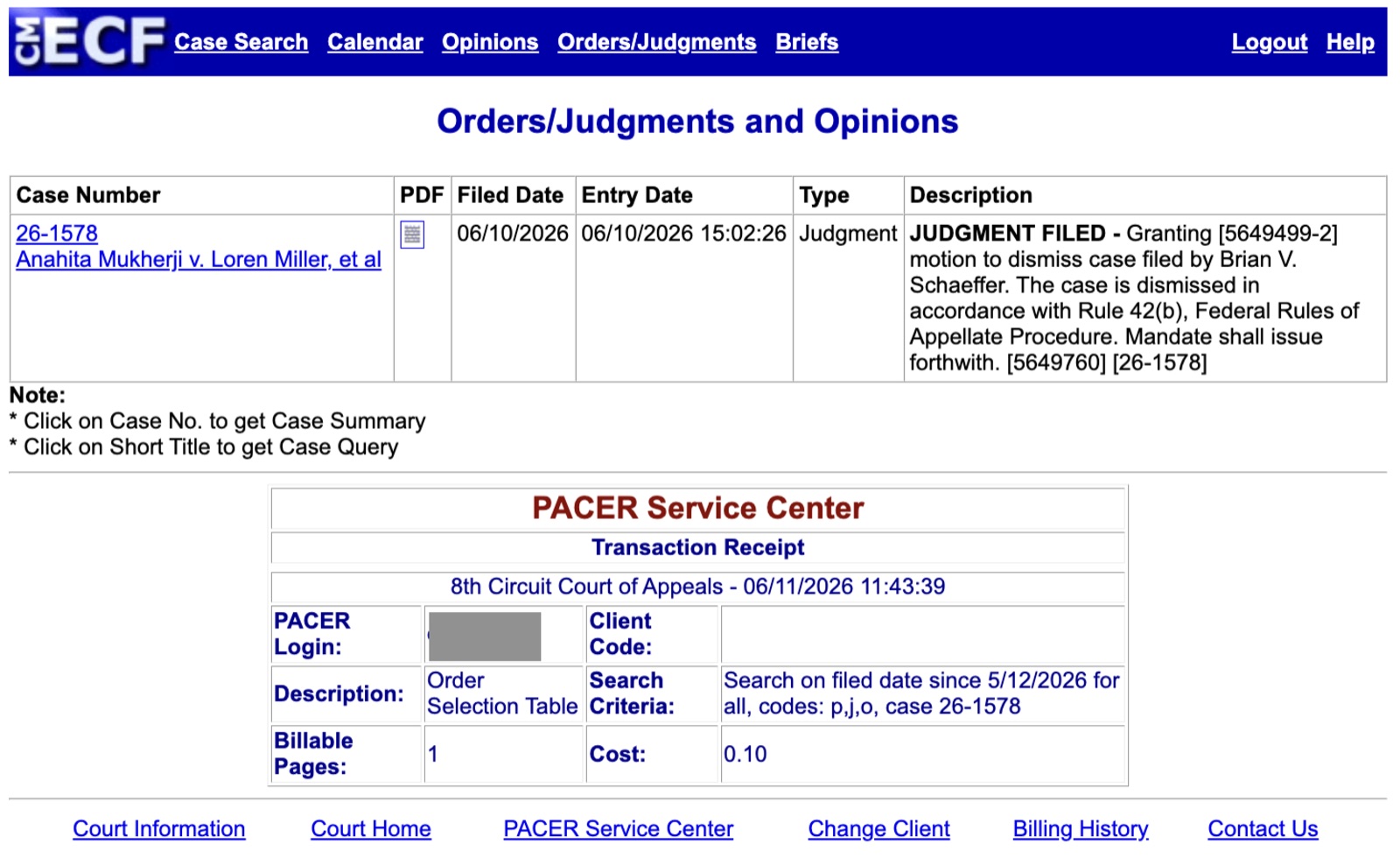
Читается он так. Дело 26-1578, тип записи Judgment, дата подачи и проведения 10 июня 2026, 15:02:26. В колонке Description вся история одной строкой: «удовлетворено ходатайство [5649499-2] о прекращении дела, поданное Brian V. Schaeffer; дело прекращено по правилу 42(b) Федеральных правил апелляционного судопроизводства; мандат выйдет немедленно». Числа в квадратных скобках: внутренние номера документов в системе суда. [5649499-2] это то самое ходатайство правительства из 115 слов, [5649760] сам judgment. По этим номерам документы будут находиться в досье вечно: бюрократическая машина, в отличие от политики агентств, ничего не забывает.
И отдельное удовольствие: квитанция PACER внизу экрана: поиск этой записи система оценила в одну billable page, то есть 10 центов. Финал трёхмесячной апелляции правительства США по делу, способному перевернуть EB-1A, продаётся по цене жвачки.
А вот и сам документ, одна страница. Весь текст по существу:
«JUDGMENT
Appellant's motion to dismiss the appeal is granted. The appeal is hereby dismissed in accordance with the Federal Rules of Appellate Procedure 42(b).
The Court's mandate shall issue forthwith.
June 10, 2026
Order Entered Under Rule 27A(a): Clerk, U.S. Court of Appeals, Eighth Circuit. /s/ Susan E. Bindler»
«РЕШЕНИЕ
Ходатайство апеллянта о прекращении апелляции удовлетворено. Апелляция настоящим прекращается в соответствии с правилом 42(b) Федеральных правил апелляционного судопроизводства.
Мандат суда подлежит немедленному исполнению.
10 июня 2026 года.
Приказ вынесен на основании правила 27A(a): Клерк Апелляционного суда США по Восьмому округу, /подпись/ Susan E. Bindler»
Заметьте: под судебным актом, похоронившим трёхмесячную апелляцию правительства США, нет ни одной судейской подписи. Только клерк. Правило 27A(a) позволяет клерку самостоятельно удовлетворять процессуальные ходатайства, по которым нет спора, а спора не было, обе стороны хотели одного и того же. Так заканчиваются дела, в которых одна из сторон просто встала и вышла.
Документ третий. Мандат: «ключ», которым дело вернули вниз
Через четыре минуты после judgment Восьмой округ выпустил мандат. В досье района он лёг записью № 30:
«MANDATE from USCA - 8th Circuit (26-1578). In accordance with the judgment of June 10, 2026, and pursuant to the provisions of Federal Rule of Appellate Procedure 41(a), the formal mandate is hereby issued in the above-styled matter».
Если простым языком: пока дело в апелляции, оно юридически «находится наверху», районный суд не хозяин собственного решения. Мандат это передаточный акт, которым апелляционный суд возвращает дело вниз. Обычно его держат минимум семь дней (на случай ходатайств о пересмотре). Здесь он вышел через четыре минуты, потому что пересматривать больше нечего и некому. С этой секунды решение Bataillon работает в полную силу, и стоит за ним уже не районный суд, а вся вертикаль.
Почему правительство сдалось. Арифметика, которая всё объясняет
Самый частый вопрос, который мне вчера задали: как это вообще логично? У правительства был Пятый округ в кармане (Amin v. Mayorkas, 2022), был аргумент «коллеги с нами согласны», была бесконечная глубина карманов. Почему не драться?
А вот теперь смотрите на доску глазами DOJ. Это простая таблица из двух колонок.
Цена капитуляции
Одна одобренная I-140. Возможный счёт по EAJA: десятки тысяч долларов. Одно неприятное, но районное решение остаётся в книгах как persuasive authority. Всё. Ущерб локализован в одном деле одной журналистки.
Цена проигрыша в Восьмом округе
Обязательный прецедент на семь штатов: Небраска, Айова, Миссури, Миннесота, обе Дакоты, Арканзас. Final Merits автоматически мертва для каждого заявителя округа, без всяких исков. Плюс прямое расхождение с Пятым округом, а значит, почти гарантированный Верховный суд, где после Loper Bright у агентств всё плохо. Потенциальный итог: «процедура незаконна по всей стране».
И теперь главный вопрос: а какие были шансы выиграть? Честный ответ: плохие. Bataillon дал пять независимых оснований: правительству нужно было опрокинуть все пять, осечка по любому из пяти означает проигрыш. А ядро решения вообще не юридическая теория, а исторический факт: Final Merits действительно ввели в 2010 году меморандумом, без публичного обсуждения. Этот факт нельзя переспорить брифом, он просто случился. Единственный щит, Amin, выкован в 2022 году, при живой деференции Chevron, и в 2026 году им машут с осторожностью даже те, кто его любит.
Получается выбор: почти гарантированно проиграть с катастрофическими системными последствиями, или гарантированно «проиграть» с последствиями в одно дело. DOJ выбрал второе. Я бы тоже выбрал второе.
Это называется non-acquiescence, и это стратегия, а не паника
У американских агентств есть давняя, отполированная годами практика: проигрывать отдельным истцам и не признавать проигрыш системно. Исполнить решение в отношении конкретного человека, и продолжать применять ту же политику ко всем остальным, потому что районное решение связывает агентство только в этом деле. USCIS вчера сделал хрестоматийный ход из этого учебника: заплатил пешкой (одна петиция), чтобы не подставить ферзя (Final Merits на семь штатов, а через Верховный суд, на всю страну).
Отдельно скажу про вещь, которая греет лично меня. В прошлом посте я расписывал три дорожки, по которым правительство может строить бриф: «Loper Bright нас не касается», «это разъяснение, а не правило», «это уникальный случай». Ответ оказался четвёртым, и его не было в моём списке: не писать бриф вообще. Потому что любой из трёх аргументов, изложенный письменно и проигранный, становился бы прецедентом уровня апелляционного округа. Robinson Immigration предупреждали ровно об этом ещё в феврале: дорожка опасная, проигрыш создаст прецедент сильнее районного. В DOJ, судя по всему, читали те же предупреждения.
«Их же теперь завалят исками?» Завалят. И их это устраивает
Контринтуитивная часть. Казалось бы: решение устояло, дорожка протоптана, Грин рассылает приглашения, сейчас на USCIS обрушится лавина исков по FMD, и зачем тогда было сдаваться?
Я полез в судебные базы и посчитал лавину. Метод простой: полнотекстовый поиск по архиву RECAP, который индексирует документы федеральных судов. Фраза «Mukherji v. Miller» встречается в документах всего трёх чужих дел. Вот она, лавина, вся, с карточками дел:
- Muthineni v. Seng (Мэриленд, 8:26-cv-00518, подан 8 февраля), иск самого Брайана Грина, к жалобе приложено решение Mukherji как экспонат. Решения нет, дело висит.
- Cannabrava de Sousa v. Selby (Небраска, 4:26-cv-03056, 18 февраля, адвокат Marcelo Gondim), подан в том же округе, чтобы поймать то же прецедентное поле. Правительство в мае взяло продление на ответ. Решения нет.
- Kleinova v. USCIS (Аляска, 4:26-cv-00021, 3 апреля), всплывает по поиску «final merits determination» + EB-1A, по текстам документов похоже на ту же тему. Решения нет.
Почему так мало? Потому что фильтр на входе зверский: 11 тысяч долларов адвокату, 12-24 месяца ожидания, и судья смотрит только на тот пакет, который уже лежал в USCIS, слабый ответ на RFE в суде не спасти. Через это сито проходят единицы.
А теперь почему даже настоящая лавина не страшит USCIS:
Каждый иск индивидуальный
Class action нет (Грин их принципиально не делает, я цитировал его логику в прошлом посте). Сто исков это сто отдельных дел, каждое из которых правительство контролирует по отдельности.
У правительства всегда есть аварийный выход
Любое дело, которое начинает выглядеть опасно (попался въедливый судья, маячит ещё одно громкое решение), можно погасить за неделю: одобрить петицию до решения, и дело исчезает как moot. Истец счастлив, прецедента нет. Этот рычаг работает в каждом деле из ста.
Проигрыши поштучно дешевле прецедента
Проиграть двадцать районных дел = двадцать одобренных петиций плюс гонорары. Неприятно, но это операционные расходы. Один проигрыш в апелляционном округе = тысячи одобрений автоматически, без всяких исков. Математика очевидна.
То есть стратегия USCIS теперь видна целиком, и она почти элегантна: система продолжает работать для всех, кто не судится. Кто судится, тех откупают поштучно. А прецедент, способный сломать систему целиком, не возникает никогда, потому что правительство больше не доводит такие дела до апелляционных судов. Mukherji им этот урок преподала: один раз довели, чуть не потеряли всё.
Для нас с вами в этом есть и хорошая новость, она ниже в практическом разделе. Но сначала о том, что происходит внутри самой крепости.
Что USCIS делает прямо сейчас (проверено 11 июня)
В прошлом посте у меня была картинка «дом горит, а жильцы пьют чай». Докладываю: чаепитие продолжается. Я прошёлся по всем официальным каналам дважды: вечером 10-го, в день отзыва апелляции, и ещё раз сегодня перед публикацией.
- Policy Manual не тронут. Том 6, часть F, глава 2, та самая, с двухэтапным анализом, помечена «Current as of May 08, 2026». Двухэтапная процедура на месте («Officers should use a two-step analysis to evaluate the evidence»), формулировка «final merits» встречается в главе пять раз, упоминаний Mukherji ноль. Последнее обновление мануала вообще, от 8 мая, посвящено deferred action и к EB-1A отношения не имеет: единственное слово «extraordinary» в свежих обновлениях относится к prosecutorial discretion, не к ability. Лента обновлений: за весь 2026 год только две записи, и обе мимо EB-1.
- Ньюсрум молчит. Свежие релизы USCIS Newsroom: офис по убежищу в Сан-Антонио (5 июня), продление TPS для Ливана (28 мая), денатурализация двенадцати человек (14 мая). Про EB-1A, Kazarian, Mukherji ни слова, ни в мае, ни в июне.
- AAO продолжает не замечать. В базе решений внутренней апелляционной инстанции Mukherji по поиску не находится ни разу. Оговорка: non-precedent решения AAO публикуются с задержкой, так что «не цитирует» здесь означает «пока не видно, чтобы цитировала».
- Сервис-центры штампуют дальше. По свежим RFE и отказам, которые обсуждают в комьюнити, Final Merits применяется как ни в чём не бывало. Тут ссылки не будет: это живые кейсы участников, не публичная база, поэтому отношусь к пункту как к наблюдению, а не доказательству.
И самое интересное: RIN 1615-AC85, тот самый проект нового правила «Petition for Immigrant Worker Reforms», который должен узаконить двухэтапную процедуру через нормальное публичное обсуждение. В прошлом посте я советовал следить за Federal Register. Слежу: проекта там до сих пор нет. По плану из официального реестра NPRM должен был выйти в январе 2026, просрочка уже пять месяцев.
Почему просроченный NPRM и отозванная апелляция это одна история
Сложите два факта. Правительство отказалось защищать старый способ введения Final Merits (меморандум 2010 года без обсуждения). И параллельно готовит новый способ, то же самое, но через правильную процедуру. Зачем тратить капитал Solicitor General на защиту мемо, который сами же собираются заменить регламентом? Как только NPRM выйдет и правило вступит в силу, главный аргумент Mukherji, процедурный, испарится для всех будущих дел. Останется только спор по существу («в законе нет требования вечно быть на вершине»), и его правительство предпочтёт вести уже на свежем, процедурно чистом фундаменте.
Так что не обольщайтесь тишиной. Отзыв апелляции это не «USCIS смирился». Это «USCIS перенёс битву на поле, где у него больше шансов».
И ещё один штрих к тишине: формального подтверждения, что петиция самой Мукерджи уже одобрена, на момент публикации нигде нет. Приказ теперь финальный, неисполнение это прямой contempt of court, так что одобрение либо уже случилось тихо, либо случится на днях. Но публично USCIS не сказал даже этого.
Брайан Грин больше не одиночка: команда из бывших юристов DOJ
Помните мой портрет из прошлого поста: solo practitioner из Денвера, тысяча тихих исков, один громкий выигрыш, вебинары по воскресеньям, 11 тысяч за иск? Этот портрет за месяц устарел по всем пунктам, кроме цены.
Первое. На апелляции у Мукерджи было уже три адвоката: сам Грин, Jessica Ariela Dawgert (фирма Ariela Lake Law & Consulting) и Sarah L. Vuong. Это видно прямо в карточке дела Восьмого округа.
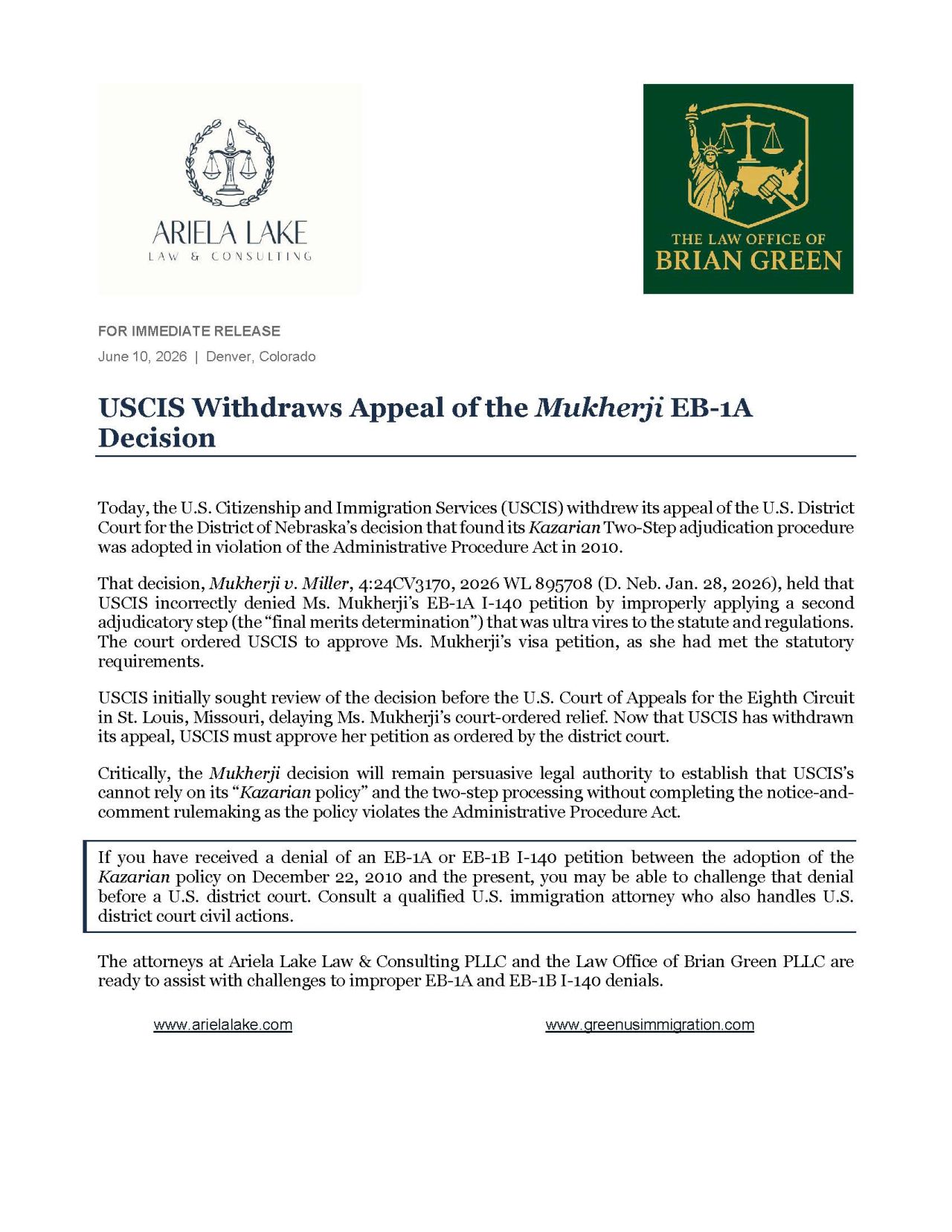
Второе. В день отзыва апелляции Грин и Ariela Lake выпустили совместный пресс-релиз: «USCIS Withdraws Appeal of the Mukherji EB-1A Decision». И в нём, помимо новости, лежит расширение воронки, на которое стоит посмотреть внимательно:
«Если вы получили отказ по петиции EB-1A или EB-1B I-140 в период с принятия политики Kazarian 22 декабря 2010 года по настоящее время, вы можете оспорить этот отказ в федеральном районном суде».
Третье, и самое вкусное: кто такие Ariela Lake. Я открыл LinkedIn-профили обеих партнёрш, и вот тут история заиграла новыми красками. Фирма основана в январе 2026 года, в тот самый месяц, когда вышло решение Bataillon. Основали её две юристки, которые на двоих отдали Министерству юстиции США больше тридцати лет:
- Jess Dawgert: больше пятнадцати лет в DOJ. Senior Litigation Counsel в Office of Immigration Litigation (OIL), а это ровно тот офис, который защищает USCIS в федеральных судах, и под конец карьеры Associate Deputy Attorney General, ведущая весь иммиграционный портфель в аппарате заместителя Генерального прокурора. Из DOJ ушла в 2025 году.
- Sarah Vuong: около пятнадцати лет в том же OIL, путь от Trial Attorney и Senior Litigation Counsel до Assistant Director (последнюю должность подтверждают судебные документы 2025 года). Плюс работа юристом внутри самого USCIS. Из DOJ тоже ушла в 2025 году.
А теперь откройте ходатайство об отзыве апелляции (оно выше) и посмотрите на блок подписей: Brett A. Shumate, Assistant Attorney General; Samuel P. Go, Assistant Director; Brian V. Schaeffer, Trial Attorney. Assistant Director Office of Immigration Litigation это та самая должность, которую недавно занимала Sarah Vuong. Капитуляция правительства подписана её бывшим офисом, через её бывшую должность. Люди, которые годами сами решали, какие апелляции правительство будет защищать, а какие тихо сольёт, теперь стоят по другую сторону, и им не нужно угадывать, как думает та сторона. Они ею были.
И деталь на будущее, которая мне кажется самой стратегически говорящей. Три недели назад Ariela Lake отчиталась в LinkedIn о шести свежих допусках в федеральные районные суды: Северная Калифорния, Мэриленд, Небраска, Восточный Нью-Йорк, Южный Нью-Йорк, Северный Техас. Теперь наложите на карту: Muthineni уже идёт в Мэриленде, Cannabrava в Небраске, а Cyrus Mehta ещё в феврале предсказывал волну исков именно в Нью-Йорке и Северной Калифорнии. Это не случайный список юрисдикций. Это карта будущего наступления, поданная за три недели до капитуляции правительства.
Ирония в том, что вчерашний день сделал его маркетинг одновременно сильнее и честнее. Раньше формула была «единственный адвокат, выигравший Kazarian Step 2». Теперь она звучит как «единственный адвокат, выигравший Kazarian Step 2, и правительство отказалось это оспаривать». С точки зрения продаж это бронебойно. С точки зрения права, прецедентом уровня округа его победа так и не стала, и теперь уже не станет никогда. Что об этом думает сам адвокатский цех: в следующем разделе, и это отдельное удовольствие.
Пост Грина и комментарии под ним: цех читает ход одинаково
Сам Грин объявил новость у себя в LinkedIn, и этот пост вместе с комментариями стоит разобрать отдельно, потому что комментарии под ним превратились в стихийный опрос американского иммиграционного цеха. За первые сутки: 518 реакций, 37 комментариев, 33 репоста. Вот сам пост:
«Big News! USCIS отозвал свою апелляцию на решение районного суда Небраски по делу #Mukherji, в котором суд установил, что политика #Kazarian была принята незаконно в 2010 году. Поздравляю моих апелляционных со-адвокатов Jess Dawgert и Sarah Vuong! Детали в нашем #пресс-релизе! #SueUSCIS #EB-1A #LoperBright»
Кто пришёл в комментарии: вот самое интересное. Не соискатели грин-карт, а почти сплошь практикующие иммиграционные адвокаты: партнёры фирм, бывший appeals officer USCIS, профильные EB-1A юристы. И когда читаешь их подряд, видишь редкую картину: весь цех, не сговариваясь, читает ход правительства одинаково. Вот выжимка, перевод мой.
Sharon L., адвокат по EB-1A (Нью-Йорк/Нью-Джерси), формулирует ровно то, что я разбирал выше:
«Похоже, правительство сбросило апелляцию, чтобы избежать проигрыша: победа [Мукерджи в апелляции] сделала бы Kazarian незаконным на апелляционном уровне, то есть прецедентным правом. Последствия для заявителей EB-1 были бы монументальными!»
Toni Xu, иммиграционный адвокат, пишет с плохо скрываемым разочарованием:
«Интересный ход. Правительство уходит от создания нежелательного прецедента об отмене Kazarian? А я-то надеялась, что они проиграют на апелляционном уровне и вы выбьете Kazarian совсем :)»
Mohammad Shair отвечает в треде тем, кто решил, что Final Merits умерла, заметьте, это слово в слово вывод моего разбора:
«Но этап final merits не мёртв. Решение районного суда связывает только это конкретное дело. Правительство поступило стратегически: отозвав апелляцию, USCIS избежал решения Восьмого округа, которое создало бы обязательный прецедент сразу в нескольких штатах».
Ron Matten: лучшая шутка треда, в которой шутки на самом деле мало:
«Видимо, придётся переписать формулировки в моих сопроводительных письмах к EB-1A: "Согласно Mukherji, федеральный районный суд Небраски признал применение Kazarian незаконным, и поскольку USCIS слишком боится идти в апелляцию, офицеру следует считать решение Mukherji контролирующим прецедентом… иначе Brian Green снова подаст на вас в суд" 😉»
Evan J. Law: а вот это уже не шутка совсем. Это пишет бывший appeals officer USCIS, человек, который сам годами рассматривал апелляции внутри агентства:
«Регуляции EB-1A уже встраивают концепции признания и известности в саму доказательную базу критериев. <…> Если и вводный параграф, и положение о сопоставимых доказательствах говорят об установлении соответствия требованиям, какую роль должна играть отдельная субъективная проверка? Будет крайне интересно наблюдать влияние Mukherji на будущие решения».
Olga Prygoda показывает, как быстро решение превращается в рабочий инструмент, в тот же день:
«Это сделало мой день, очень, очень длинную среду, полную разборов аргументов по EB-1A! С удовольствием обсудила бы, как нам аккуратно вшить это в наши ответы на NOID».
А главный вопрос треда задал Timothy D’Arduini, и он состоит из шести слов: «Can they make it precedent, Brian Green?», по-нашему «а прецедентом это сделать можно?». Ответ, как мы уже разобрали: нет. Именно поэтому правительство и отозвало апелляцию.
Что говорит сама команда победителей
Показательнее всех формулировка Jess Dawgert в её репосте: «Хотя решения Восьмого округа мы пока не получим, отзыв апелляции важен. Решение районного суда остаётся значимым инструментом в продолжающейся борьбе с незаконными решениями». Заметьте аккуратность: «инструмент», не «прецедент». Даже победители не продают это как отмену Final Merits, в отличие от того, как новость наверняка перескажут в телеграм-каналах.
Итого: ни один юрист в треде не прочёл это как «USCIS признал ошибку и сдался». Все читают его как стратегическое отступление ради сохранения системы. Когда пятьдесят практиков, бывший офицер USCIS и бывшие юристы DOJ сходятся в одном чтении, это чтение можно считать установленным.
Тест на 11 тысяч: окно EAJA открылось
В прошлом посте я разбирал обещание Грина клиентам: 11 тысяч за иск, которые в случае победы вернутся через Equal Access to Justice Act. И давал оговорку: возврат не автоматический, суд должен признать, что позиция правительства не была «substantially justified», и ставки ограничены.
Так вот, у этого обещания только что появился публичный тест, причём на его собственном флагманском деле.
По EAJA ходатайство о гонорарах подаётся в течение 30 дней с момента, когда решение стало «окончательным и необжалуемым». Пока висела апелляция, окно не открывалось. Вчера, 10 июня, с выходом мандата, открылось. И помните аккуратную формулировку из отзыва: каждая сторона несёт свои расходы «по апелляции»? Районный EAJA эта формулировка не закрывает.
Аргумент у него, надо сказать, теперь роскошный: трудно утверждать, что позиция правительства была «substantially justified», если правительство само отказалось её защищать, не написав ни единого брифа. Следим за досье района, любое движение там будет видно.
Что это меняет для вашей петиции, RFE и отказа
Теперь практика. Честная раскладка: что изменилось вчера, а что нет.
Что НЕ изменилось. Final Merits жива. Офицер, который будет читать вашу петицию на следующей неделе, работает по тому же Policy Manual, что и месяц назад. Mukherji как была решением одного районного суда, так и осталась: обязательной силы за пределами этого дела у неё нет, и теперь уже никогда не будет, потому что апелляционный суд по ней не выскажется. Если вам сегодня пришёл отказ по FMD, он не стал автоматически недействительным.
Что изменилось. Три вещи, и все три весомые.
Решение стало неуязвимым
Месяц назад любой ответ на RFE с цитатой из Bataillon нёс встроенный риск: «а если Восьмой округ отменит?» Этот риск умер 10 июня в 15:06. Решение финально, неотменимо и навсегда останется в книгах. Цитата «суд не находит в законе ничего, что поддерживало бы такое требование» теперь из решения, которое правительство имело полную возможность стереть и осознанно отказалось.
Появился новый аргумент, которого месяц назад не было
«Правительству была предоставлена возможность защитить процедуру Final Merits в апелляционном суде, и оно отозвало собственную апелляцию, не подав ни одного брифа в её защиту». Это не интерпретация, это процессуальный факт с номерами документов. В ответе на RFE, в брифе AAO, в федеральном иске он работает как тихое, очень неудобное давление: агентство применяет к вам процедуру, которую отказалось защищать в суде.
Математика федерального иска улучшилась
Теперь известно, как правительство ведёт себя под давлением в этой теме: продлевает, тянет, и сдаётся, когда пахнет прецедентом. Для качественного кейса это означает, что сценарий «USCIS одобряет петицию, лишь бы не доводить до решения» это не теория, а наблюдаемая модель поведения. Federal lawsuit окончательно превратился из жеста отчаяния в рабочий инструмент. Для качественного кейса. Слабый профиль и слабый ответ на RFE федеральный суд по-прежнему не спасёт, судья смотрит только на тот пакет, который видел офицер.
И постоянное правило, которое после вчерашнего стало только важнее: каждый ответ на RFE пишите так, будто его будет читать федеральный судья. Вероятность того, что это действительно случится, за последние полгода выросла, а не упала.
Вопросы из чата: что может быть, а чего не может
Новость разлетелась быстрее, чем я дописал этот пост, в чате комьюнити вопросы уже сыплются. Отвечу на самые частые сразу, одним местом, чтобы потом ссылаться.
«Может, собраться и подать коллективный иск? И связаться с данными адвокатами? 😄»
Соблазн понятен: нас много, отказы похожие, скинулись, завалили. Но коллективного иска не будет, и на это есть три причины.
Первая: позиция самого Грина. Я цитировал его переписку в первой части: он принципиально не делает class actions. Его логика: «коллективные иски слишком сложны и дороги, и если попадётся не тот судья, проиграют все сразу. Индивидуальные иски доставляют правительству максимум хлопот и дают вам наилучшие шансы». После 10 июня эта логика только окрепла, мы теперь точно знаем, что правительство сдаёт именно одиночные сильные кейсы.
Вторая: юридическая. Иск по APA это не «мы все пострадали от FMD». Суд проверяет одно конкретное решение по одному конкретному административному архиву: ваши критерии, ваш RFE, ваш отказ. У каждого они свои. Для класса нужны общие вопросы факта и права, а здесь общая только процедура, и ровно по ней каждый истец всё равно тащит в суд свой индивидуальный отказ. Класс тут попросту плохо собирается.
Третья: тактическая. Один большой иск это одна точка отказа: не тот судья, не тот округ, и проиграли все разом, подарив правительству прецедент. Сто маленьких исков в разных округах это сто отдельных проблем для DOJ, каждую из которых им приходится решать (и, как мы видим, решают они их откупом). Стратегия «роя» сильнее стратегии «тарана». Это, по сути, главный практический урок всей истории Mukherji.
А вот связаться с адвокатами можно, и это несложно: вебинары Грина по воскресеньям, сайты фирм публичны (greenusimmigration.com, arielalake.com). Только идите туда с открытыми глазами: $11 тысяч, 12-24 месяца, и фильтры из следующего вопроса.
«У меня уже есть отказ по Final Merits. Его теперь отменят автоматически?»
Нет. Решение связывает USCIS только в деле самой Мукерджи. Ваш отказ стоит и будет стоять, пока вы сами его не атакуете: motion to reopen, AAO или федеральный иск. Никакого автоматического пересмотра старых отказов не происходит и не произойдёт: агентство даже Policy Manual не тронуло.
«Могу я сослаться на Mukherji в ответе на RFE или в петиции?»
Можно и нужно, но с правильными ожиданиями. Связка теперь тройная: цитата Bataillon («суд не находит в законе ничего, что поддерживало бы такое требование») + Loper Bright + новый факт: правительству дали шанс защитить Final Merits в апелляционном суде, и оно отозвало собственную апелляцию, не подав ни одного брифа. Это сильное давление на офицера. Но это аргумент, а не серебряная пуля: формально офицер не обязан подчиниться районному решению чужого округа. Смысл ссылки не в том, чтобы «победить RFE одной цитатой», а в том, чтобы заложить фундамент для возможного суда и заставить офицера писать отказ аккуратнее (аккуратный отказ труднее, чем шаблонный).
«Может, тогда подождать с подачей, пока Final Merits добьют окончательно?»
Скорее наоборот. «Окончательно добьют» может не наступить никогда: апелляционного прецедента теперь не будет, а USCIS готовит правило RIN 1615-AC85, которое узаконит двухэтапную процедуру через правильный процесс, и тогда главный процедурный аргумент Mukherji умрёт для будущих дел. Прямо сейчас вы в окне: процедура юридически ранена, правительство показало, что защищать её в суде не хочет, а новое правило ещё не вышло. Ждать значит ждать ужесточения, а не либерализации.
«А какие реальные шансы, если я всё-таки пойду в суд?»
Честный ответ: почти всё решает то, что уже лежит в вашем административном архиве, и добавить туда ничего нельзя. Профиль, при котором схема Mukherji работает: офицер признал три и больше критериев, а отказ построен на втором этапе: «недостаточно sustained acclaim», «не на вершине области». Это ровно тот тип отказа, который правительство теперь не хочет видеть в суде, и наблюдаемая модель его поведения: откупаться от таких кейсов одобрением. Если же у вас не закрыты сами критерии, федеральный суд не спасёт: судья проверяет решение офицера, а не пересобирает ваш кейс заново. И в этом случае 11 тысяч это очень дорогой способ получить второй отказ, теперь уже федеральный.
Как почитать это дело самому (и почему район вас не пустит)
Небольшой практический бонус, потому что я вчера прошёл этот путь сам и сэкономлю вам пару часов.
Если вы полезете в PACER в досье районного суда Небраски качать документы, на большинстве из них получите «You do not have permission to view this document». Это не сбой и не ваш аккаунт. Это правило FRCP 5.2(c): в иммиграционных делах и делах по Social Security удалённый доступ к материалам имеют только стороны. Посторонним через интернет доступны только сам docket и приказы суда. Жалоба, брифы сторон, административный архив: только с терминала в здании суда.
Оцените иронию: дело о том, как агентство шестнадцать лет прятало от публики процедуру, само наполовину спрятано от публики процессуальным правилом.
Как финал выглядит в досье района: две последние записи
Для коллекционеров фактуры: вот как смерть апелляции отразилась в официальном docket report районного суда (я выкупил полный отчёт, 40 центов за 4 страницы). После записи № 28 от 30 марта три месяца тишины, и затем две финальные записи в один день:
- Запись № 29 (10.06.2026): «COPY of Order (Judgment) from USCA»: район получил копию приказа Восьмого округа о прекращении апелляции. Простым языком: району официально сообщили, что наверху всё кончилось.
- Запись № 30 (10.06.2026): «MANDATE from USCA»: тот самый мандат. Простым языком: дело вернулось домой, решение от 28 января снова полностью в руках района, и теперь навсегда.
Больше записей в этом досье не будет, кроме одной возможной: EAJA-ходатайства Грина о гонорарах (см. выше). Статус дела в шапке досье так и значится: CLOSED с 28 января 2026 года. Дело, которое перевернуло разговор о Final Merits, целиком уместилось в тридцать docket-записей.
Что доступно бесплатно и без ограничений:
- Решение Bataillon от 28 января: в RECAP-досье района, кнопка Download PDF.
- Ходатайство об отзыве апелляции: прямая ссылка на PDF в RECAP (полный текст и перевод выше в этом посте, PDF приложен).
- Judgment Восьмого округа от 10 июня: полный текст и перевод выше, PDF приложен к посту. Если хотите сами: PACER Appellate (ecf.ca8.uscourts.gov), раздел Orders/Judgments, дело 26-1578, стоит дайм. Приказы апелляционного суда, в отличие от района, открыты для всех.
- Досье апелляции целиком: в RECAP.
Поставьте расширение RECAP
Если пользуетесь PACER, поставьте расширение RECAP. Всё, что вы покупаете, автоматически попадает в бесплатный публичный архив, и следующему человеку документ достаётся даром. Половина ссылок в этом посте существует потому, что кто-то с этим расширением выкупил документы раньше нас.
За чем следить дальше
Watchlist из прошлого поста закрылся почти весь (бриф 11 мая не случился; amicus briefs не понадобились, дело умерло до брифинга). Новый список такой:
- До ~10 июля: EAJA-ходатайство Грина в районном досье (RECAP). Подаст или нет, сколько запросит, сколько присудят: это первый публичный тест обещания «11 тысяч вернутся».
- Фактическое одобрение I-140 Мукерджи. Скорее всего узнаем из LinkedIn самой Мукерджи или анонсов Грина. Если через месяц-полтора одобрения всё ещё не будет, это отдельная история про contempt, и громкая.
- RIN 1615-AC85 в Federal Register. Теперь это главный фронт. Публикация NPRM будет означать начало легализации Final Merits через правильную процедуру, и старт окна публичных комментариев, в котором сможет поучаствовать каждый из нас. Без шуток: комментарии к NPRM читают, и связка «Mukherji + Loper Bright» в них будет уместна как нигде.
- Три живых иска: Muthineni (Мэриленд), Cannabrava de Sousa (Небраска), Kleinova (Аляска). Первое же решение по любому из них покажет, повторяема ли схема Mukherji, или это был тот самый «один точный выстрел». И отдельно следим, не начнёт ли правительство гасить эти дела досрочными одобрениями: это будет лучшим подтверждением всей модели из этого поста.
- Policy Manual: uscis.gov/policy-manual/updates. Любое движение в томе 6, части F: сигнал.
Главное в пяти пунктах
10 июня 2026: в 9:56 утра отзыв «with prejudice», в 15:02 приказ, в 15:06 мандат. Решение Bataillon о незаконности Final Merits финально и необжалуемо. USCIS обязан одобрить петицию Мукерджи.
Проигрыш в Восьмом округе означал бы обязательный прецедент на семь штатов и почти неизбежный Верховный суд. Правительство сдало одно дело, чтобы прецедент не возник. Прогноз из прошлого поста («USCIS, может, не очень-то и хочет продолжать») сбылся буквально.
Policy Manual не изменён (проверено 11 июня), сервис-центры работают по-старому, а просроченный NPRM RIN 1615-AC85 это настоящий план: провести двухэтапную процедуру через публичное обсуждение и закрыть процедурную дыру, на которой выиграла Mukherji.
Три копикэт-дела за 4,5 месяца, ноль решений. Зато появился новый аргумент для RFE и судов: правительство отказалось защищать процедуру, которую продолжает к вам применять. И наблюдаемая модель поведения: под давлением USCIS откупается, а не дерётся.
Его со-адвокаты по апелляции это основательницы Ariela Lake: Jess Dawgert (15+ лет в DOJ, экс-Associate Deputy Attorney General) и Sarah Vuong (около 15 лет в Office of Immigration Litigation, экс-Assistant Director). Воронка теперь зовёт всех с отказами EB-1A и EB-1B с декабря 2010 года. А до ~10 июля у Грина окно подать EAJA по делу Mukherji: первый публичный тест обещания «11 тысяч вернутся». Следим.
Я не адвокат, и этот пост не является юридической консультацией. Информация основана на открытых источниках: судебных документах из PACER и архива RECAP (досье 8th Cir. № 26-1578 и D. Neb. № 4:24-cv-03170), официальных страницах USCIS и Federal Register, публикациях иммиграционных адвокатов и пресс-релизе участвовавших в деле фирм. Все документы проверены по первоисточникам на 11 июня 2026 года; ситуация может измениться. Если у вас есть отказ, RFE, NOID или вопрос о выборе между AAO, motion и федеральным судом, обсудите вашу ситуацию с лицензированным иммиграционным адвокатом.
