Виза O-1 и визы талантов
O-1 Петиционер - O-1 для РФ/РБ - EB-1A Награды - EB-2 NIW гид - Истории успехов - Оплата подачи
Частый вопрос: USCIS одобрил петицию O-1 на 3 года, а визу в паспорт вклеили на меньший срок. Почему? Если вы только начинаете изучать тему, полезно сначала понять, кто подаёт петицию O-1 и как работает агентская схема.
Коротко:
Россия (РФ) - визу O-1 вклеивают на срок до 24 месяцев (2 года).
Беларусь - визу O-1 вклеивают на срок до 12 месяцев (1 год).
Это не равно сроку статуса. Статус O-1 одобряется USCIS на срок до 3 лет.
Находиться в США можно по I-94 (срок пребывания), а не по дате на визе.
O-1 виза для граждан РФ и Беларуси: сроки и правила
Основная статья по теме: O-1 виза: требования
Это главный источник путаницы. В иммиграционной системе США есть три понятия, которые часто смешивают:
| Что | Что определяет | Кто выдаёт | Где смотреть |
|---|---|---|---|
| Визовый штамп | До какой даты вы можете въехать в США | Консульство | Стикер в паспорте |
| Статус (I-797) | На какой срок одобрена петиция / разрешение на работу | USCIS | I-797 Approval Notice |
| I-94 | До какой даты вы можете находиться в США | CBP (таможня при въезде) | i94.cbp.dhs.gov |
Виза может истечь, пока вы в США, и это нормально. Виза нужна только для въезда. Если вы внутри страны и ваш I-94 / статус действителен, просроченная виза не является нарушением. Новый штамп можно получить только за пределами США, в консульстве.
Срок статуса O-1 (одобрение USCIS)
USCIS одобряет петицию O-1 на срок до 3 лет (initial period of stay). Продление - с шагом в 1 год. Подробнее о том, что происходит со статусом O-1 при увольнении.
Срок визового штампа (консульство)
Срок визы определяется не USCIS, а Reciprocity Schedule Госдепартамента - двусторонними соглашениями между США и каждой страной. Для граждан разных стран сроки отличаются:
| Гражданство | Виза O-1 | Количество въездов | Консульский сбор |
|---|---|---|---|
| Россия (РФ) | 24 месяца (2 года) | Multiple | None |
| Беларусь | 12 месяцев (1 год) | Multiple | None |
Срок визового штампа не может превышать срок одобренной петиции (I-797) или максимум по reciprocity schedule - берётся меньшее из двух.
Те же ограничения действуют и для других категорий виз. Для граждан РФ по reciprocity schedule: B-1/B2 - 36 месяцев, H-1B - 24 месяца, L-1 - 24 месяца. Для граждан Беларуси сроки ещё короче. Полная таблица по всем категориям: РФ | Беларусь.
O-1 виза выдается россиянам на 2 года (24 месяца)
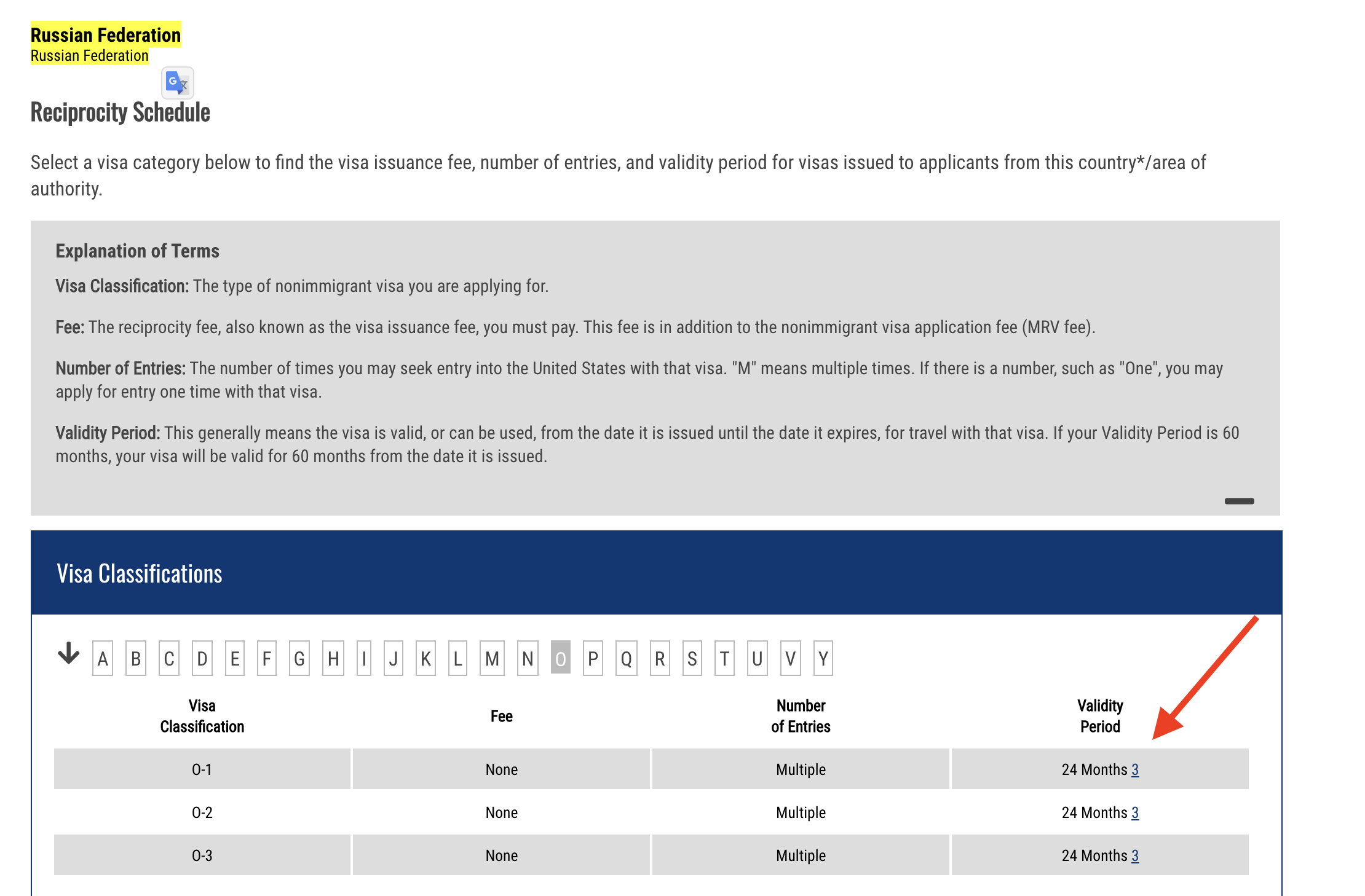
Reciprocity Schedule для РФ: O-1 - 24 месяца, multiple entry. Источник: travel.state.gov
Даже если USCIS одобрил петицию на 3 года, консульство вклеит визу максимум на 2 года. О том, как проходит интервью в консульстве, есть отдельный разбор.
Гражданам Беларуси визу O-1 к сожалению вклеивают лишь на 12 месяцев
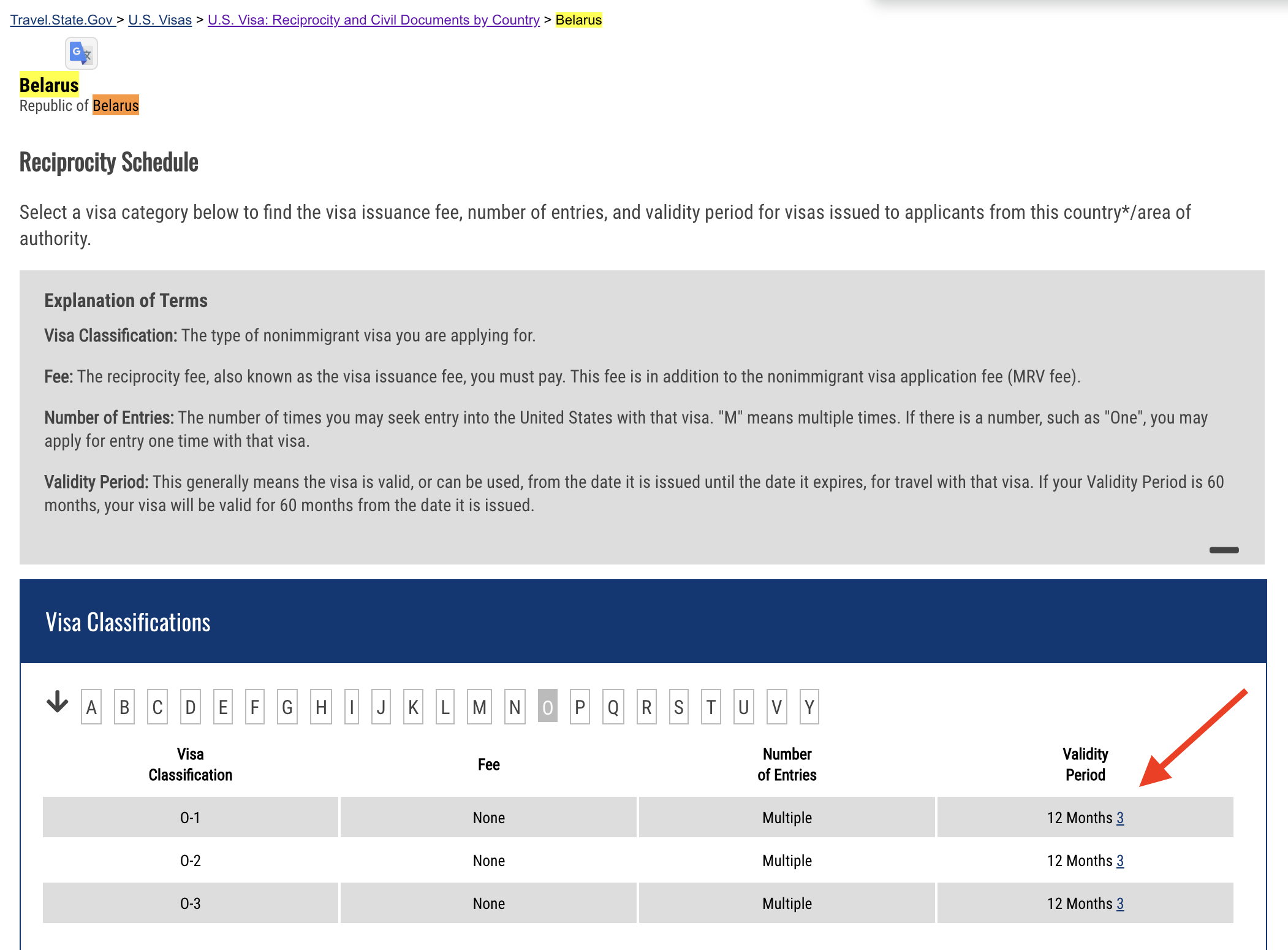
Reciprocity Schedule для Беларуси: O-1 - 12 месяцев, multiple entry. Источник: travel.state.gov
Гражданам Беларуси визу O-1 вклеивают на 1 год. При трёхлетней петиции придётся перештамповываться дважды.
Перештамповка: как это работает
Два правила, которые важно не путать:
- Внутри США можно оставаться с истёкшей визой, если ваш статус (I-94) действителен. Истёкшая виза при нахождении в стране не является нарушением. Работать тоже можно - разрешение на работу привязано к статусу, не к визе.
- Новый визовый штамп получают только за пределами США, в консульстве. Внутри США перештамповаться нельзя (программа domestic visa renewal пока охватывает только H-1B и L-1, O-1 не включён). Если вы выехали и виза истекла - перед возвращением нужен новый штамп.
На практике это значит: если вы не планируете выезжать из США до конца петиции, перештамповка вам не нужна. Если планируете поездки - следите за сроком визы.
Апрув получен, вы вне США. Что дальше?
Выше - ответ на основной вопрос о сроке визового штампа. Ниже - расширенный практический гид: весь путь от одобрения петиции до въезда в США.
-
Дождаться I-797 (Notice of Approval). I-797 - это бумажный документ, который USCIS присылает почтой после одобрения петиции. Нужен для интервью и на въезде. USCIS отправляет его петиционеру (работодателю или агенту) в США, который пересылает вам копию или скан. Оригинал обычно остаётся у петиционера. На интервью обычно достаточно копии или скана, но требования конкретного поста лучше проверить отдельно. Доставка может занять 2-4 недели (при premium processing петиция рассматривается за 15 дней). Отслеживать статус: USCIS Case Status. Текущие сроки рассмотрения: USCIS Processing Times
-
Заполнить DS-160 - онлайн-анкета на визу. Заполняется электронно на ceac.state.gov. В анкете: личные данные, история поездок, информация о работе. После заполнения сохраните confirmation page с баркодом - распечатайте и возьмите на интервью. Инструкция: сайт Госдепа
-
Оплатить консульский сбор (MRV fee) - $205 для категории O. Сбор за рассмотрение заявки, не возвращается даже при отказе. Для граждан РФ и РБ дополнительный reciprocity fee по O-1 не взимается (см. таблицу выше). Оплата: ustraveldocs.com
-
Выбрать консульство и записаться на интервью. С сентября 2025 года Госдеп ограничил подачу в третьих странах. Раньше можно было записаться в любое консульство мира, теперь только в стране гражданства или резидентства (по паспорту или ВНЖ). Для граждан РФ Госдеп назначил: Астана (Казахстан) и Варшава (Польша). Для граждан Беларуси: Вильнюс (Литва) и Варшава (Польша). Если у вас есть ВНЖ другой страны - можно подавать там. Полный список назначенных консульств: страница Госдепа. Найти посольство или консульство США в нужной стране: usembassy.gov. Записаться на интервью: ustraveldocs.com. Время ожидания по консульствам: wait times Госдепа. Учтите текущую ситуацию с приостановкой виз для ряда стран. Обзор на нашем форуме: 11 консульств по странам
-
Медосмотр для O-1 не нужен. В отличие от иммиграционных виз (EB-1A, EB-2 NIW), для неиммиграционной O-1 визы медосмотр (I-693) не требуется. Медкомиссия понадобится позже, если будете подавать на грин-карту
-
Собрать документы на интервью:
- Паспорт (действительный минимум 6 месяцев после планируемого въезда)
- I-797 Approval Notice (копия; оригинал обычно у петиционера)
- DS-160 confirmation page (распечатанная)
- Фото по требованиям Госдепа (5x5 см, белый фон). Если параллельно подаёте на грин-карту, требования к фото другие - см. фото на грин-карту: 9 ошибок
- Подтверждение оплаты MRV fee
- Петиция и supporting documents (recommendation letters, CV, контракт) - на случай вопросов офицера
- Если подаёте по ВНЖ (не по гражданству): карта ВНЖ / permesso di soggiorno / proof of lawful residence в стране подачи
- Если подаёте по второму паспорту: оба паспорта
Подробный разбор
-
Пройти интервью. Консульский офицер проверяет, соответствуете ли вы одобренной петиции. Для O-1 интервью обычно короткое - петиция уже одобрена USCIS. Могут спросить: чем занимаетесь, кто работодатель, какие достижения. Реальные истории: интервью в консульстве - 10+ историй
-
Возможные исходы интервью - их три:
a) Виза одобрена. Паспорт забирают на 1-5 дней для вклейки визы.
b) Отказ по секции 214(b). Самый распространённый тип отказа в неиммиграционных визах. Секция 214(b) Immigration and Nationality Act (INA) устанавливает презумпцию иммиграционного намерения: каждый заявитель считается потенциальным иммигрантом, пока не докажет обратное. Проще говоря, офицер не убедился, что вы вернётесь из США. Для O-1 это редкость (петиция уже одобрена USCIS), но бывает. Отказ по 214(b) не является окончательным. Обязательного срока ожидания для повторной подачи нет: податься заново можно в любое время. Но это уже будет новая подача, а не пересмотр старой - нужно заново заполнить DS-160, снова оплатить консульский сбор ($205) и записаться на новое интервью. Практический смысл повторная подача обычно имеет тогда, когда появились новые доказательства или существенно изменились обстоятельства.
c) Административная проверка по секции 221(g). Это не отказ, и логика здесь другая, чем при 214(b). Секция 221(g) INA позволяет консульству приостановить выдачу визы для дополнительной проверки. Визу не выдали, но и не отказали. Кейс отправляют на проверку в Вашингтон. Вам выдают цветной листок и просят ждать. Часто можно просто дослать запрошенные документы без новой оплаты, если уложиться в срок, который даёт консульство.
Что важно знать про административную проверку:
- Это проверка безопасности (security check). Для граждан РФ и РБ, особенно в технических областях (IT, инженерия, наука, биотех), она назначается очень часто
- Может включать проверку MANTIS (технологический контроль) или заполнение дополнительной анкеты DS-5535
- Сроки по O-1 для граждан РФ/РБ: от нескольких недель до года-полутора. Стандартных сроков нет - зависит от специальности, страны подачи и текущей загрузки. Реальная статистика сроков по консульствам
- Паспорт всё это время может находиться в консульстве (некоторые посты возвращают на время проверки - зависит от консульства)
- Проверить статус: ceac.state.gov
- Если проверка затянулась на многие месяцы - есть варианты давления: mandamus и обращение в Конгресс
- Подробный разбор: административная проверка 221(g) - что это и что делать
-
Получить паспорт с визой. Консульство вклеит визовый стикер. Срок: для граждан РФ - до 24 месяцев, для РБ - до 12 месяцев (но не больше срока петиции). Паспорт возвращают курьером или забираете лично - зависит от консульства
-
Въезд в США. На границе офицер CBP проверит паспорт, визу и I-797. В систему заносится запись I-94 - ваш официальный срок пребывания. Можно въехать до 10 дней раньше начала петиции
Что проверить после въезда
Сразу после прохождения паспортного контроля проверьте свою запись I-94:
- Зайдите на i94.cbp.dhs.gov и введите данные паспорта
- Проверьте Class of Admission - должно быть O-1 (не B-1, не WT, не другой класс)
- Проверьте Admit Until Date - она не должна быть обрезана раньше срока одобренной петиции. По 8 CFR 214.2(o)(6)(iii) O-1 может быть допущен на срок петиции плюс до 10 дней после, поэтому дата на I-94 не всегда совпадает день в день с I-797 - это нормально. Главное, чтобы она не была раньше окончания петиции
- Сохраните PDF или скриншот - пригодится для работодателя, получения SSN, водительских прав
- Если CBP поставил не тот статус или не ту дату - это нужно исправлять через запрос в CBP как можно скорее. Не откладывайте, ошибки в I-94 создают проблемы с работодателем и при продлении
10 дней до и после петиции
По 8 CFR 214.2(o)(6)(iii), держатель O-1 может:
-
Въехать в США до 10 дней раньше даты начала петиции. Работать в эти дни нельзя - только устраиваться, искать жильё, открывать счёт
-
Оставаться в США до 10 дней после окончания петиции. Эти дни даются на сборы и выезд. Работать тоже нельзя
-
Если не выехали после окончания разрешённого периода по I-94 и не подали продление или смену статуса - ситуация становится серьёзной. Здесь важно различать два понятия:
- Out of status (вне статуса) - вы больше не в законном иммиграционном статусе
- Unlawful presence (нелегальное пребывание) - начинает копиться после окончания authorized period of stay, и именно это ведёт к запретам на въезд: 180+ дней = 3-летний бар, 365+ дней = 10-летний бар
Важный нюанс: если вы своевременно подали (timely filed) продление (I-129 для O-1) или смену статуса (I-539) до истечения I-94, вы находитесь в period of authorized stay и unlawful presence не начисляется, пока заявка рассматривается. Если не подали вовремя - проконсультируйтесь с адвокатом, последствия зависят от обстоятельств
Семья: O-3 для супруга и детей
Супруг(а) и неженатые дети до 21 года могут получить визу O-3 (derivative status) по 8 CFR 214.2(o). Что нужно знать:
- Каждый член семьи заполняет отдельную DS-160 и проходит отдельное интервью (обычно вместе с principal applicant)
- Нужны: паспорт, свидетельство о браке / рождении (с переводом), копия I-797 principal applicant
- Срок визы O-3 привязан к визе O-1 principal applicant - не может превышать его
- Reciprocity schedule применяется по гражданству каждого члена семьи. Если у супруга другое гражданство, срок визы может отличаться. Проверить: reciprocity schedule
- Держатели O-3 не могут работать в США. В отличие от H-4, у O-3 нет права на EAD (разрешение на работу). O-3 не входит в список категорий, имеющих право на EAD
- Дети могут учиться (школа, университет) без смены статуса
- К O-3 применяются те же стандарты оценки намерений, что и к principal O-1. Супругу не нужно доказывать “привязку к дому” как при B или F визах
Смена работодателя / агента / новая петиция
Если вы меняете работодателя, новый работодатель должен подать новую петицию O-1 (форма I-129) в USCIS. В отличие от H-1B, у O-1 нет portability - нельзя начать работать на нового работодателя до одобрения новой петиции (см. USCIS Policy Manual, Volume 2, Part M).
Частый вопрос: можно ли въехать по визе, вклеенной на основании старой петиции?
- Визовый штамп привязан к классификации (O-1), а не к конкретному работодателю. На визе указано имя петиционера, но CBP допускает въезд по действующей визе + новому I-797
- На практике, если у вас действующая виза O-1 и новая одобренная петиция (новый I-797), въехать можно
- Берите с собой: оба I-797 (старый и новый), письмо от нового работодателя, копию новой петиции. CBP может задать вопросы
- Если сомневаетесь - безопаснее перештамповать визу по новой петиции
Второй паспорт, ВНЖ и выбор консульства
Для аудитории РФ/РБ это частый кейс - многие имеют второе гражданство или ВНЖ другой страны.
- Reciprocity schedule определяется по гражданству (паспорту, который вы предъявляете), а не по месту подачи. Если подаёте по паспорту РФ - срок визы O-1 будет 24 месяца, даже если подаёте в Варшаве. Если подаёте по паспорту Израиля - применяется израильская reciprocity. Проверить reciprocity для любой страны: travel.state.gov
- Где подавать: по правилам 2025 года - в стране гражданства или резидентства. Если у вас ВНЖ Италии, можно подавать в Италии (по резидентству). Если у вас второй паспорт Израиля, можно подавать в Израиле (по гражданству)
- Виза вклеивается в тот паспорт, по которому вы подаёте. При въезде нужно предъявить паспорт с визой + соответствующий I-797 + при необходимости второй действующий паспорт. Виза в израильском паспорте не сработает, если предъявляете российский паспорт
- Два паспорта одной страны (старый + новый): если виза в старом паспорте, можно въезжать с двумя. CBP поставит VIOPP штамп. Подробнее: FAQ Госдепа
Частые вопросы
USCIS одобрил на 3 года, а визу дали на 1-2 года. Это нормально?
Да. Срок визы определяется reciprocity schedule по гражданству, а не сроком петиции. Для РФ максимум 24 месяца, для РБ - 12 месяцев. Находиться в США можно весь срок петиции по I-94.
Почему визу дали меньше, чем 24 (или 12) месяцев?
24 и 12 месяцев - это максимум по reciprocity schedule. Консульство вклеит меньший срок, если петиция заканчивается раньше (берётся меньшее из двух). Например: петиция одобрена на оставшиеся 18 месяцев - визу дадут на 18, а не на 24. Бывают и постовые особенности: некоторые консульства могут выдать визу на более короткий срок по своему усмотрению, хотя для O-1 это редкость.
Можно ли оставаться в США после истечения визы?
Да, если ваш статус (I-94) действителен. Виза нужна только для въезда. Истёкшая виза внутри США не является нарушением.
Нужно ли перештамповываться, если не выезжаю?
Нет. Перештамповка нужна только если вы планируете выехать и вернуться. Если всё время в США - хватит действующего статуса.
Можно ли получить новый штамп внутри США?
Нет. Визовые штампы выдают только консульства за пределами США. Программа domestic visa renewal пока охватывает только H-1B и L-1, O-1 не включён.
Что делать, если виза в старом паспорте?
Если виза действующая, но в старом паспорте - можно путешествовать с двумя паспортами (старый с визой + новый). Оба паспорта должны быть одной страны. На въезде CBP проверит визу в старом паспорте и поставит штамп VIOPP (visa in other passport) в новый. Подробнее: FAQ Госдепа. Если виза истекла - нужна перештамповка.
Виза в старом паспорте, петиция от другого работодателя. Можно ли въехать?
Формально да, если виза действующая и класс тот же (O-1). Но берите оба I-797 и будьте готовы к вопросам CBP. Безопаснее перештамповать.
Административная проверка (221g) затянулась, а срок петиции заканчивается. Что делать?
Это одна из самых болезненных ситуаций для граждан РФ/РБ. Если проверка идёт год-полтора, петиция может истечь до получения визы. Варианты: (1) работодатель подаёт продление петиции (extension) в USCIS, пока старая ещё действует - тогда вы получите новый I-797 с новыми сроками; (2) если петиция уже истекла, потребуется новая петиция. Визу по истёкшей петиции не выдадут, даже если проверка завершилась положительно. Планируйте заранее: если проверка затягивается, начинайте процесс продления. Подробнее о сроках: реальная статистика 221(g).
Что если параллельно подал I-140 на грин-карту?
Подача I-140 сама по себе не делает O-1 невозможной. O-1 не требует доказательства неиммиграционного намерения так же строго, как, например, B-1/B-2. Но на практике консульский офицер может задать об этом вопросы, особенно при перештамповке. Подробнее: O-1 и I-140 - это иммиграционные намерения? Если планируете грин-карту: EB-2 NIW: полный гид, визовый бюллетень 2026.
Подробный разбор
Читайте также
- Интервью в консульстве: 10+ реальных историй
- Административная проверка 221(g): что это и что делать
- Сроки 221(g): реальная статистика по консульствам
- DS-5535, MANTIS и Clearance: почему от этого зависит ваша виза
- Консульства по странам: 11 городов
- O-1 виза через Бразилию: опыт
- O-1 петиционер: агент, агентская схема
- Истории успехов (2): 45 кейсов EB-1A, NIW и O-1
- Истории успехов (1): 57 кейсов EB-1A
- Mandamus и Конгресс: что работает когда проверка затянулась
- EB-2 NIW: полный гид
- Приостановка виз 75 странам
Нужна помощь с O-1, EB-1A или EB-2 NIW? Егор Акимов: от стратегии до апрува.
Источники
- Reciprocity Schedule - Россия | Беларусь | Все страны
- USCIS - O-1 Visa | Policy Manual, O classification
- 8 CFR 214.2(o) - регуляции O-1/O-2/O-3
- Ограничение подачи в третьих странах (2025)
- DS-160 | Инструкция
- I-94 | Исправление ошибок
- Отказы 214(b) | 221(g) | Статус проверки
- Сборы MRV fee $205 | Domestic renewal
- Посольства США | Запись на интервью | Wait times
- Фото | FAQ: виза в старом паспорте
- Unlawful presence | Timely filed extensions
- I-129 | I-539 | I-693 | Premium Processing
- EAD categories (8 CFR 274a.12) | USCIS Case Status | Processing Times | SSN
Информация в этой статье основана на опыте сообщества и открытых источниках. Это не юридическая консультация. Для вашей конкретной ситуации обратитесь к лицензированному специалисту.
Связанные статьи: США, иммиграция и поиск работы
📸 Фото на грин-карту 2026 - 📊 Визовый бюллетень 2026 - Поиск работы в США для иностранцев 2026 - Петиция на визу в США - 👤 Виза O-1. Петиционер - ⭐ Истории успехов